

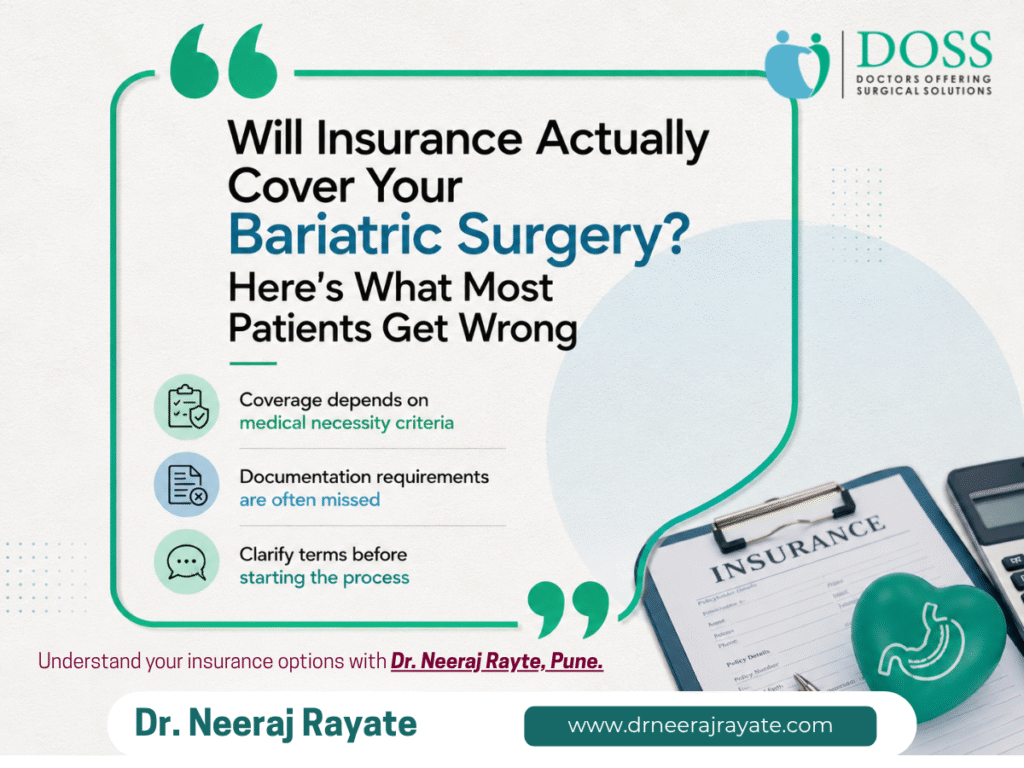
Most people considering bariatric surgery assume one of two things. Either insurance will cover it fully because it is a medically necessary procedure, or it will not cover it at all because it involves weight loss. Both assumptions are wrong, and that gap in understanding is exactly why so many patients delay treatment or get an unpleasant surprise at claim time.
The truth sits somewhere in the middle, governed by specific rules, documentation requirements, and criteria that most patients never read until they are already at the hospital counter. A recent survey by the Obesity and Metabolic Surgery Society of India, published in the journal Obesity Surgery, found that 76.1 percent of surgeons believe patients are unaware that insurance covers bariatric surgery even when they meet the medical criteria for it. That single statistic explains why so many eligible patients either skip surgery entirely or pay out of pocket for something their policy may have actually covered.
What the Insurance Rules Actually Say
In 2019, the Insurance Regulatory and Development Authority of India changed the game for weight loss surgery. Before that, most insurers treated bariatric procedures as cosmetic and refused to pay, regardless of how serious the patient’s obesity-related health issues were.
Since October 2019, IRDAI guidelines require standard health insurance policies to cover bariatric surgery, but only when it is medically necessary and not performed for purely cosmetic reasons. The eligibility criteria generally include the following:
- A Body Mass Index of 40 or higher, regardless of other conditions.
- A BMI of 35 or higher along with serious obesity-related conditions such as type 2 diabetes, obstructive sleep apnea, or coronary heart disease.
- In some cases, a lower BMI may still qualify if the patient has uncontrolled metabolic disorders despite proper medical treatment.
- The patient must generally be at least 18 years old and have documented evidence that non-surgical methods like diet, exercise, and medication have already failed.
- A written recommendation from a qualified bariatric surgeon, along with a psychological evaluation, is typically required as part of the approval process.
This is not a blanket cover for anyone wanting to lose weight. It is coverage specifically for patients whose obesity has become a documented medical risk, not a cosmetic concern.
Where Most Patients Get Tripped Up
Knowing that coverage exists is only half the picture. The bigger issue, according to surgeons across the country, is how difficult the actual claims process turns out to be in practice.
The same OSSI survey, which gathered responses from 109 bariatric surgeons between November 2024 and March 2025, found that 91.7 percent of surgeons consider the insurance approval process for bariatric surgery more cumbersome than for routine surgeries. Even more concerning, nearly one third of surgeons reported claim denial rates between 50 and 75 percent, largely due to obesity-related exclusions, mandatory waiting periods, and documentation discrepancies. The survey also found that 81.7 percent of surgeons noted patients still faced significant out-of-pocket costs even after their policy technically covered the surgery.
Here is where most patients go wrong, based on these recurring patterns:
- Assuming pre-authorisation is automatic. Nearly every insurer requires pre-authorisation before the surgery date, and skipping this step is one of the fastest ways to get a claim rejected.
- Not accounting for the waiting period. Most policies carry a waiting period of two to four years for bariatric-related claims, meaning a policy bought right before surgery will likely not help.
- Incomplete documentation of failed weight loss attempts. Insurers want proof, not just a doctor’s opinion, that diet, exercise, and medical management were tried and did not work.
- Overlooking post-surgery coverage gaps. Basic plans often exclude nutritional supplements and follow-up consultations, which are a routine part of recovery after any procedure performed by a bariatric surgeon.
- Confusing group insurance with individual policies. Corporate group health plans sometimes have shorter or no waiting periods for bariatric surgery compared to individually purchased policies, a detail many patients never check with their HR department.
Why Getting This Right Matters So Much
Delaying bariatric surgery while sorting out insurance is not a minor inconvenience. According to Dr. Randeep Wadhawan, President of the Obesity and Metabolic Surgery Society of India, postponing recommended metabolic surgery only allows obesity-related diseases to worsen, while earlier treatment supports faster recovery and better long-term outcomes. With obesity prevalence in India projected to triple by 2040 according to the same body’s research, the pressure on both patients and the healthcare system to get insurance access right is only going to increase.
Read More –
- Is Bariatric Surgery Safe? What Patients Fear vs What Doctors Actually Do
- What Happens to Your Body in the First 30 Days After Bariatric Surgery: A Week-by-Week Recovery Guide
- When Is the Right Time for Bariatric Surgery? Key Signs You Should Not Ignore
How Dr. Neeraj Rayte Can Help You Navigate This
Understanding your policy, your eligibility, and your documentation requirements before you ever step into a hospital is the single biggest advantage a patient can have going into bariatric surgery. Dr. Neeraj Rayte, an experienced bariatric surgeon in Pune, works closely with patients right from the first consultation to build the medical documentation, BMI records, and comorbidity history that insurers actually look for during claim approval.
Rather than leaving patients to figure out pre-authorization forms and waiting period clauses on their own, Dr. Rayte’s approach focuses on preparing a complete, insurer-ready case from day one, reducing the chances of delays or denials down the line. If you are exploring bariatric surgery and want clarity on what your policy will and will not cover, consulting a bariatric surgeon in Pune who understands both the surgical and insurance side of the process can save you months of unnecessary back and forth.
Frequently Asked Questions
- Does health insurance in India cover bariatric surgery? Yes, since IRDAI’s 2019 guidelines, insurers must cover bariatric surgery when it is medically necessary, typically for patients with a BMI of 40 or above, or 35 and above with serious obesity-related conditions like diabetes or sleep apnea.
- Why do so many bariatric surgery insurance claims get rejected? Surveys of bariatric surgeons show rejections commonly stem from obesity-related policy exclusions, unmet waiting periods, and incomplete documentation of prior failed weight loss attempts, rather than the surgery itself being ineligible.
- How can I improve my chances of insurance approval for bariatric surgery? Work with an experienced bariatric surgeon who can help document your BMI history, comorbidities, and previous weight loss attempts thoroughly, and always confirm your policy’s waiting period and pre-authorisation requirements before scheduling surgery.
Insurance for bariatric surgery in India exists, but it rewards patients who prepare properly and understand the process well before their scheduled date. A little homework now can save you a significant financial and emotional burden later.
#BariatricSurgery #WeightLossJourney #ObesitySurgery #BariatricSurgeonInPune #HealthInsuranceIndia #MetabolicSurgery #ObesityAwareness