

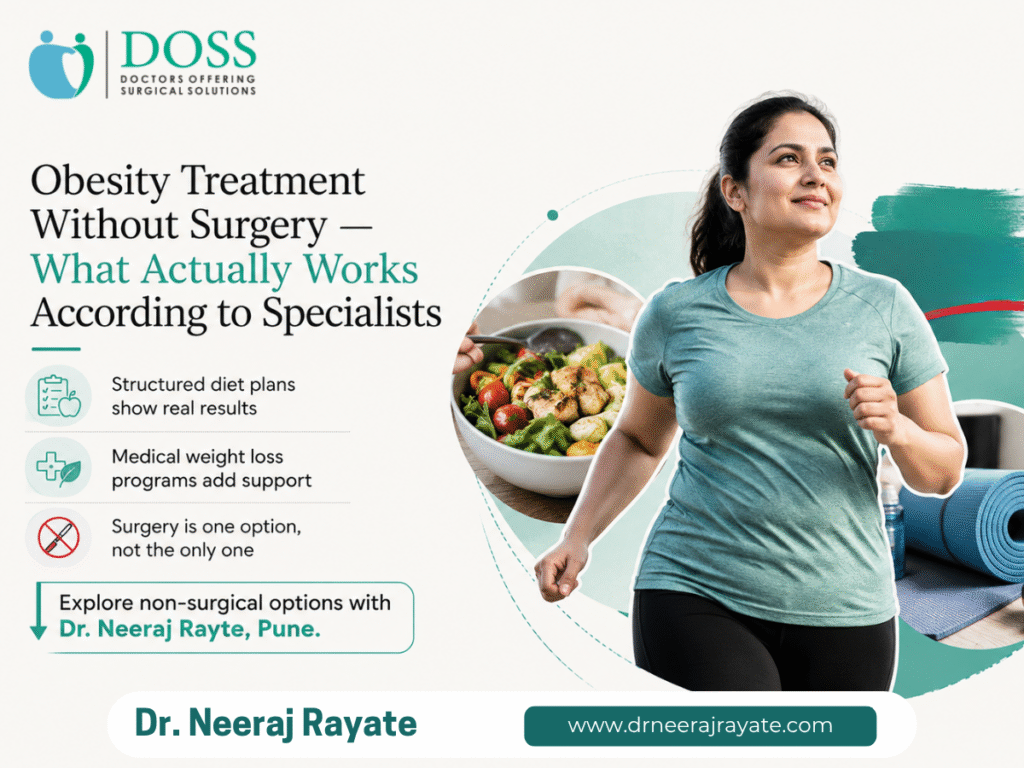
Obesity is no longer a topic whispered about in doctor’s offices. It’s a full-blown global health conversation, and for good reason. According to the World Health Organization, about 16% of adults worldwide were living with obesity in 2022, and the worldwide prevalence of obesity has more than doubled since 1990 (WHO, Obesity and Overweight Fact Sheet). In India too, urban lifestyles, processed food, and sedentary work have quietly pushed obesity rates upward, making it one of the most common reasons people walk into a clinic today.
Here’s the thing though: surgery isn’t always the first, or even the necessary, step. Many people assume that once obesity becomes “serious,” bariatric surgery is the only real answer. That’s simply not true. There’s a whole spectrum of non-surgical obesity treatment options that specialists now rely on, many of which are backed by strong clinical evidence and are genuinely changing lives without a scalpel involved.
Let’s walk through what actually works, according to the research and the doctors who deal with this every single day.
Why Non-Surgical Options Matter Before Considering Obesity Surgery
Obesity surgery, such as bariatric or metabolic procedures, remains an effective option for select patients with severe obesity or related health complications. But it’s a significant, irreversible step, and specialists generally agree it should follow a genuine attempt at non-surgical obesity treatment first, unless a person’s BMI or associated conditions make surgery medically urgent.
Non-surgical routes have become far more sophisticated in the last few years, largely because of advances in medication and a better understanding of obesity as a chronic, relapsing condition rather than a simple willpower issue. The World Health Organization itself now classifies obesity this way, describing it as arising from a complex mix of genetics, neurobiology, behaviour, and environment, not personal failure.
This shift in understanding matters because it changes how treatment is approached. Instead of one-size-fits-all diet advice, doctors now build layered treatment plans.
What Specialists Actually Recommend for Obesity Treatment
Here’s a breakdown of the non-surgical approaches that consistently show up in clinical guidelines and real-world results:
- GLP-1 and dual-agonist medications: Drugs like semaglutide and tirzepatide have genuinely changed the conversation around obesity treatment. In the head-to-head SURMOUNT-5 trial published in the New England Journal of Medicine, tirzepatide produced an average weight reduction of 20.2% over 72 weeks, compared to 13.7% with semaglutide. Real-world data from academic obesity clinics shows patients who stay consistent with these medications for over a year can lose upwards of 14 to 20% of their body weight.
- Structured lifestyle and behavioural therapy: Medication alone isn’t the whole story. Research shows that combining GLP-1 therapy with structured behavioural support leads to noticeably better outcomes, around 19% body weight reduction, compared to medication used in isolation. This includes supervised diet planning, activity coaching, and regular follow-ups rather than a one-time consultation.
- Endoscopic and device-based procedures: For patients who need more than lifestyle changes but aren’t candidates for or don’t want surgery, options like the intragastric balloon offer a middle ground. These are placed without incisions, work by creating early satiety, and are typically removed after several months, often used alongside a supervised diet plan.
- Medical nutrition therapy and metabolic monitoring: Ongoing tracking of blood sugar, lipid profiles, and metabolic markers helps doctors adjust treatment in real time rather than waiting months to see if something is working.
- Psychological and habit-based support: Since obesity is now understood as a chronic condition with behavioural roots, addressing stress eating, sleep quality, and emotional triggers is increasingly part of mainstream treatment plans, not an afterthought.
The common thread across all of these is that they work best when supervised by a specialist who can combine them based on the individual, rather than picking just one in isolation.
Where This Leaves Obesity Surgery
None of this means obesity surgery has lost relevance. For patients with a very high BMI, or those with conditions like type 2 diabetes and severe joint damage caused by excess weight, surgical options still offer outcomes that medication alone often cannot match. The point specialists make repeatedly is that surgery and non-surgical care aren’t competitors, they’re part of the same treatment ladder, and a good specialist will guide a patient to the right step rather than jumping straight to the most invasive one.
Read More –
- The Role of Genetics vs. Lifestyle in Obesity
- When to Consider Medical Treatment for Obesity
- Understanding Obesity: Causes & Effects
A Word From Dr. Neeraj Rayate
Dr. Neeraj Rayate, a bariatric and metabolic surgeon with over two decades of surgical practice, often tells patients that the goal isn’t to rush toward surgery, it’s to find the right treatment path for the right person.
If you’re exploring obesity treatment in Pune and want an honest, medically sound assessment of whether medication, lifestyle intervention, a non-surgical procedure, or surgery is right for you, Dr. Neeraj Rayate offers personalised evaluations rather than one-size-fits-all advice, blending the latest in non-surgical care with surgical expertise when it’s genuinely needed, so patients get a plan built around their actual health picture, not a generic weight-loss checklist.
Frequently Asked Questions
- Can obesity be treated without surgery? Yes. Many patients manage obesity effectively through GLP-1 medications like semaglutide or tirzepatide, structured lifestyle changes, and non-invasive procedures such as intragastric balloons. Surgery is generally considered only when these approaches aren’t enough or when BMI and related health risks are very high.
- How much weight can you lose with non-surgical obesity treatment? Clinical trials show patients on tirzepatide can lose around 20% of body weight over 72 weeks, while semaglutide users see roughly 13 to 14% reduction on average. Combining medication with behavioural support has shown even better results in real-world studies, often reaching close to 19% weight loss.
- When should someone consider obesity surgery instead of non-surgical treatment? Obesity surgery is usually recommended for individuals with a very high BMI, or those with obesity-related conditions like type 2 diabetes or severe joint problems, especially if non-surgical methods haven’t produced adequate results. A specialist evaluation is the best way to determine which path fits your specific health profile.
#ObesityTreatment #WeightLossJourney #BariatricCare #HealthyLiving #ObesitySurgery #NonSurgicalWeightLoss #PuneHealthcare #DrNeerajRayate