

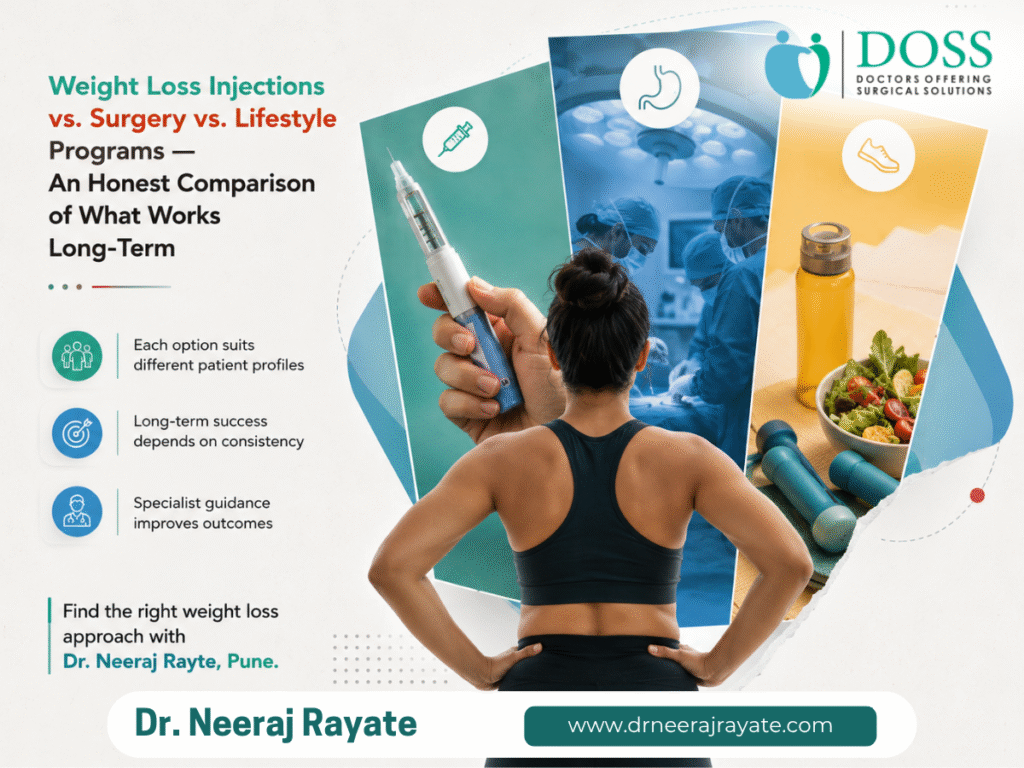
If you have spent any time researching weight loss lately, you have probably noticed the conversation has shifted dramatically. A few years ago, it was mostly about diet plans and gym routines. Now, GLP-1 injections dominate the headlines, weight loss surgery is being discussed more openly than ever, and traditional lifestyle programs are still very much part of the picture. So which one actually works, and more importantly, which one keeps the weight off?
There is no single right answer for everyone, but there is a lot of solid research comparing these approaches, and it paints a clearer picture than most social media posts let on. Let us walk through what the data actually says.
How Weight Loss Injections Perform
GLP-1 receptor agonists such as semaglutide and tirzepatide (sold under brand names like Ozempic, Wegovy, Mounjaro, and Zepbound) have become the most talked-about tool in weight management, and for good reason. In clinical trials, these medications have shown weight loss in the range of 15 to 21% of body weight, according to Johns Hopkins Medicine and other clinical reports. That is genuinely impressive for a non-surgical option.
But real-world results tend to look different from trial conditions. Research cited by Baylor Scott and White Health notes that most people using GLP-1 medications in everyday practice lose closer to 5 to 7% of their body weight, partly because a large share of patients, around 70% in some data, stop taking the medication over time due to cost, side effects, or access issues.
The bigger concern is what happens after stopping. The STEP 1 withdrawal extension study, published in The Lancet in 2022, found that patients who discontinued semaglutide after a year of treatment regained roughly two-thirds of the weight they had lost within just 12 months. This does not mean the medication does not work. It means it manages a chronic condition rather than resolving it, similar to how a blood pressure medication works only while you are taking it.
Where Weight Loss Surgery Fits In
Weight loss surgery, also known as bariatric or metabolic surgery, includes procedures like sleeve gastrectomy and gastric bypass. A 2025 head-to-head study presented at the American Society for Metabolic and Bariatric Surgery (ASMBS) Annual Scientific Meeting found that patients who underwent bariatric procedures lost an average of 58 pounds over two years, compared to just 12 pounds for patients on GLP-1 medications for at least six months. That works out to roughly five times more weight loss with surgery.
A few reasons weight loss surgery tends to outperform other options long-term:
- It is a one-time procedure, so there is no ongoing medication adherence required to maintain the physical changes
- The Swedish Obese Subjects study, one of the longest-running bariatric surgery studies published in the New England Journal of Medicine, has tracked patients for over 20 years and shown sustained weight loss along with significantly reduced mortality compared to non-surgical patients
- Johns Hopkins Medicine notes that people who undergo weight loss surgery may lose 60 to 70% of their excess body weight and tend to keep most of it off, with meaningfully lower rates of conditions like type 2 diabetes and heart disease
That said, weight loss surgery is a significant medical decision, not a shortcut. It requires proper screening, a recovery period, and lifelong dietary adjustments. It is not the right fit for everyone, which is exactly why a proper consultation matters before deciding.
What About Lifestyle Programs Alone?
Structured lifestyle programs, meaning supervised diet changes, exercise plans, and behavioral coaching, remain a foundational part of weight management, even for people who eventually pursue injections or surgery. On their own, lifestyle interventions typically produce modest weight loss, often in the range of 5 to 10% of body weight in well-supervised clinical programs, though this varies widely based on adherence and support structure.
The honest limitation here is sustainability. Long-term studies consistently show that lifestyle-only weight loss is harder to maintain without ongoing support, largely because the body’s hunger and metabolic signals actively work against weight loss over time. This does not mean lifestyle programs do not matter. It means they work best as a foundation underneath medication or surgery, not always as a standalone long-term solution for significant weight loss.
So Which Option Actually Wins Long-Term?
Based on the available research, a simple ranking would look like this:
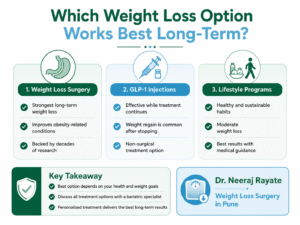
- Weight loss surgery shows the strongest long-term outcomes for significant, sustained weight loss and improvement in obesity-related conditions, backed by decades of follow-up data.
- GLP-1 injections offer a meaningful non-surgical option, but results are heavily dependent on continued use, and weight regain after stopping is well documented.
- Lifestyle programs alone provide real, valuable benefits, but tend to produce smaller and less durable results without additional medical support for patients with significant weight to lose.
The right choice ultimately depends on your starting weight, health conditions, prior weight loss attempts, and personal comfort with each approach. This is a decision best made with a specialist who can walk you through your specific case rather than a generic online comparison.
Read More –
- Six Basic Things Everyone Should Know About Lifestyle for Healthy Weight Loss
- Silent Dangers of Obesity: How Excess Weight Can Lead to Diabetes, Heart Disease & Joint Problems
- The Role of Genetics vs. Lifestyle in Obesity
A Word From Dr. Neeraj Rayate
Every patient’s weight loss journey is different, and the right path depends on individual health history, prior attempts, and long-term goals, not trends. If you have tried lifestyle changes and injections without lasting results, or if you are simply looking for an honest, personalized assessment of your options, including whether weight loss surgery in Pune might be right for you, it is worth having that conversation with a specialist who can walk you through the real risks, benefits, and expected outcomes for your specific situation.
Dr. Neeraj Rayate works with patients considering weight loss surgery in Pune to help them understand which option, whether medical, surgical, or lifestyle-based, genuinely fits their health needs rather than pushing a one-size-fits-all solution. If long-term, sustainable weight loss is your goal, a proper consultation is the best place to start.
Frequently Asked Questions
- Is weight loss surgery better than GLP-1 injections for long-term results? Research, including a 2025 ASMBS study, shows that weight loss surgery typically results in significantly more weight loss over two years compared to GLP-1 injections, along with better long-term maintenance since it does not rely on continued medication use. However, the right option depends on individual health factors best assessed through a consultation.
- What happens if I stop taking weight loss injections? Studies, including the STEP 1 withdrawal extension published in The Lancet, show that most patients regain a significant portion of lost weight, often around two-thirds, within a year of stopping GLP-1 medications. This is because these medications manage weight rather than permanently altering the body’s metabolic response.
- Can lifestyle programs alone lead to lasting weight loss? Lifestyle programs can produce meaningful weight loss, typically in the 5 to 10% range in supervised settings, but long-term maintenance without additional support is often challenging due to the body’s natural resistance to sustained weight loss. They tend to work best combined with medical or surgical treatment for more significant weight loss goals.
#WeightLossJourney #BariatricSurgery #GLP1 #HealthyLiving #WeightLossSurgeryPune #ObesityAwareness #SustainableWeightLoss #HealthTransformation