

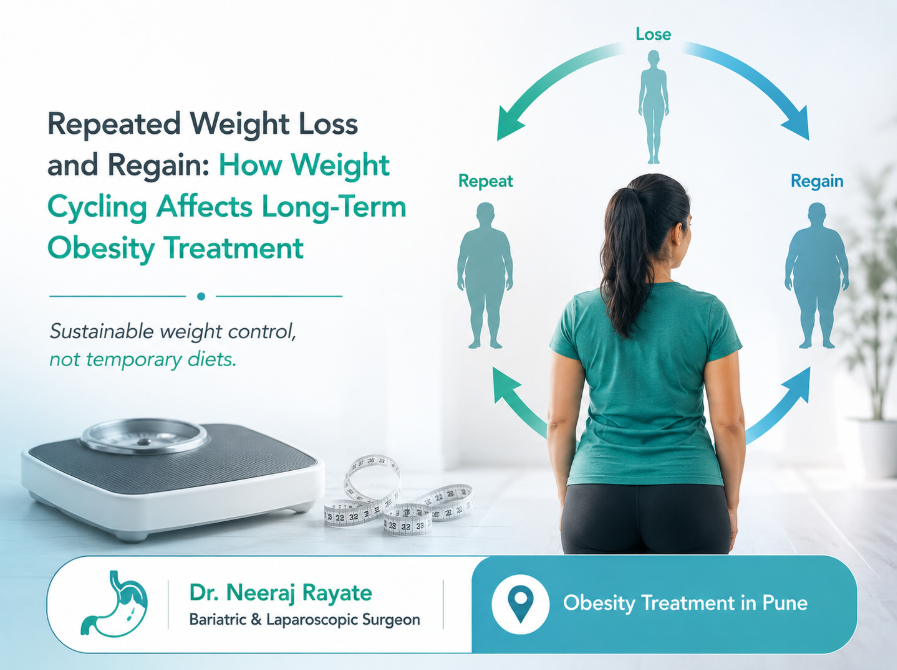
Moving Beyond Repeated Dieting With Obesity Treatment in Pune
Losing 10 kilograms, regaining it, starting another diet and repeating the same cycle can be physically and emotionally exhausting.
This pattern is often called weight cycling, sometimes informally referred to as yo-yo dieting.
Many people experiencing obesity have gone through several rounds of successful short-term weight loss followed by gradual regain. This does not necessarily mean they lacked motivation. Obesity is a complex chronic disease influenced by appetite regulation, hormones, genetics, environment, sleep, medications and other factors.
Effective obesity treatment in Pune therefore needs to focus on long-term weight management rather than simply achieving the fastest possible reduction on the weighing scale.
Why Does Weight Often Return After Dieting?
When body weight falls, the body can respond with biological adaptations.
Appetite may increase while energy expenditure changes.
These mechanisms developed to protect the body against periods of food shortage, but they can make long-term weight maintenance difficult in today’s environment.
This is one reason maintaining a large amount of weight loss through short-term dieting alone can be challenging.
What Is Weight Cycling?
Weight cycling refers to repeated periods of intentional weight loss followed by regain.
The amount of weight lost and regained can vary considerably.
Some people experience small fluctuations, while others repeatedly lose and regain a substantial proportion of their body weight.
Normal minor weight fluctuations should not automatically be labelled harmful weight cycling.
Does Regaining Weight Mean the Diet Failed?
It may be more useful to ask whether the treatment strategy was sustainable.
Very restrictive diets can produce rapid short-term weight loss because calorie intake falls dramatically.
But if the plan cannot realistically be maintained, previous eating patterns may return.
A sustainable treatment strategy needs to account for hunger, lifestyle, medical conditions, food environment and long-term adherence.
Does Weight Cycling Affect Metabolic Health?
Research examining weight cycling and cardiovascular or metabolic outcomes has produced complex results, partly because studies define weight cycling differently.
Obesity itself remains an important health risk.
Therefore, fear of possible weight cycling should not discourage someone with obesity from pursuing evidence-based treatment.
The objective should be sustainable weight reduction and improved health, not avoiding treatment because previous diets were unsuccessful.
Why Is Obesity Considered a Chronic Disease?
Organizations including the World Health Organization recognize obesity as a chronic disease involving abnormal or excessive fat accumulation that can impair health.
Like other chronic conditions, obesity may require ongoing management.
Stopping treatment after reaching a target weight can allow biological and environmental pressures promoting weight regain to re-emerge.
This is why maintenance is part of treatment rather than an optional final stage.
What Should Long-Term Obesity Treatment Include?
Depending on individual needs, management can involve:
- Sustainable nutritional changes
- Regular physical activity suited to health and mobility
- Sleep and behavioral assessment
- Anti-obesity medication when appropriate
- Management of obesity-related diseases
- Bariatric or metabolic surgery for eligible patients
Different patients require different combinations.
Are Weight-Loss Medicines a Shortcut?
No.
Modern anti-obesity medicines act on biological pathways involved in appetite and weight regulation.
They are prescribed for appropriate patients as part of medical obesity management.
Like treatments for other chronic diseases, benefits may depend on continued treatment and follow-up.
Medication choice should consider medical history, side effects, contraindications and individual goals.
When Is Bariatric Surgery Considered?
Metabolic and bariatric surgery is an evidence-based treatment for appropriately selected patients with obesity.
The ASMBS and International Federation for the Surgery of Obesity and Metabolic Disorders (IFSO) updated indications for metabolic and bariatric surgery in 2022, reflecting evidence regarding its effectiveness for obesity and metabolic disease.
Surgery is not a punishment for failing diets. It changes gastrointestinal physiology and appetite regulation and can produce substantial, durable weight reduction in appropriately selected patients.
Can Weight Return After Bariatric Surgery?
Some degree of weight regain can occur after bariatric surgery.
Long-term outcomes depend on several factors including procedure type, eating patterns, activity, hormonal responses and follow-up.
Significant regain should prompt evaluation rather than shame.
Treatment may involve nutritional review, behavioral support, medication or, in selected cases, procedural options.
Why Is Muscle Preservation Important?
Rapid dieting can reduce both fat and lean body mass.
Adequate protein intake and appropriately planned resistance exercise can help preserve muscle during weight reduction.
Muscle supports mobility, function and metabolic health.
The quality of weight loss therefore matters, not just the total kilograms lost.
What Is a Better Measure of Success?
Health improvements may occur even when someone does not reach an “ideal” body weight.
Improved blood pressure, better glucose control, improved sleep apnea, increased mobility and better quality of life are meaningful outcomes.
A sustainable reduction that improves health can be more valuable than repeatedly achieving a lower number through extreme dieting and regaining it.
Stop Treating Every Regain as a Personal Failure
Repeated weight regain can be discouraging, but it provides useful information.
It may indicate that the previous strategy focused too heavily on short-term restriction and not enough on biological appetite, sustainability and maintenance.
Modern obesity care offers several evidence-based treatment options beyond simply advising someone to “eat less.”
Obesity Treatment in Pune With Dr. Neeraj Rayate
If you have repeatedly lost and regained weight despite serious efforts, a structured medical assessment may help identify a more sustainable approach.
Dr. Neeraj Rayate provides evaluation for patients seeking obesity treatment in Pune, including discussion of lifestyle strategies and surgical weight management when clinically appropriate.
The goal is not another temporary diet. Long-term obesity treatment should focus on sustainable weight control, metabolic health and quality of life.
Frequently Asked Questions
1. Is repeatedly losing and gaining weight harmful?
Research on weight cycling is complex, but repeated regain can make long-term obesity management frustrating. The priority should be moving from short-term restrictive diets toward sustainable, evidence-based treatment.
2. Why do I regain weight even after successful dieting?
Weight loss can trigger biological changes that increase appetite and favor weight regain. Unsustainable dietary restriction and environmental factors can also contribute.
3. Should I consider bariatric surgery after repeatedly regaining weight?
Possibly, if you meet appropriate medical criteria. Eligibility depends on BMI, obesity-related health conditions, previous treatment and overall health rather than the number of diets you have attempted.
#obesitytreatmentinpune #obesity #weightcycling #weightregain #weightmanagement #bariatricsurgeryinpune #metabolichealth #drneerajrayate