

Understanding ERCP and Gallbladder Stone Treatment
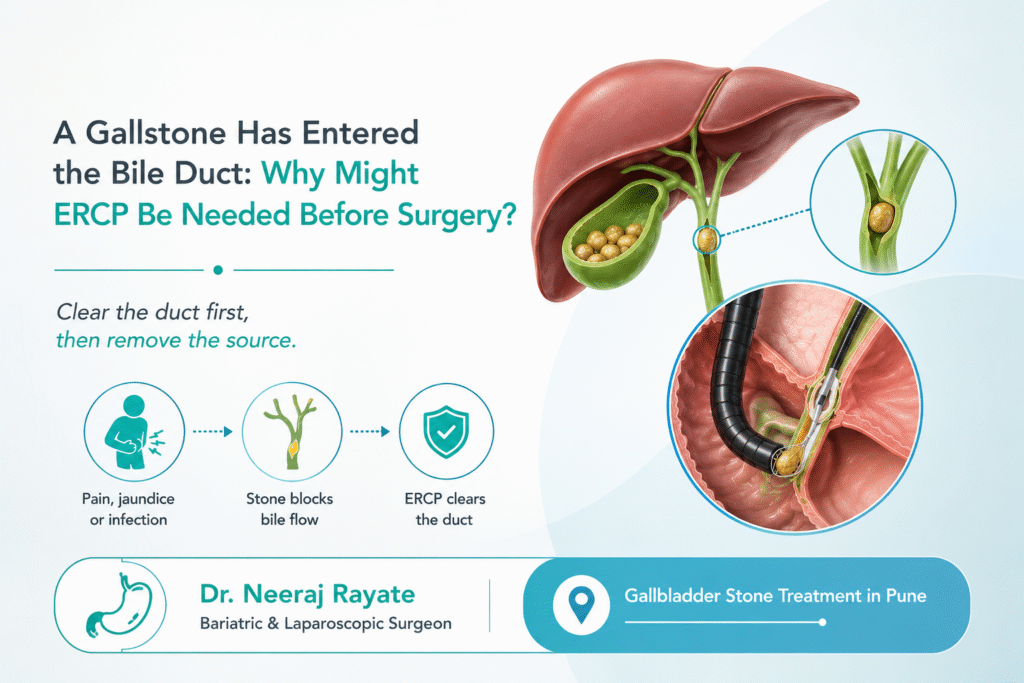
Gallstones usually form inside the gallbladder. Sometimes, however, a stone leaves the gallbladder and enters the common bile duct, the channel that carries bile from the liver and gallbladder toward the intestine.
This condition is known as choledocholithiasis.
A bile duct stone creates a different problem from a stone sitting quietly inside the gallbladder. It can obstruct bile flow and potentially cause jaundice, infection or pancreatitis.
In such situations, patients seeking gallbladder stone treatment in Pune may be advised to undergo a procedure called ERCP before gallbladder surgery.
Understanding why both procedures may be required can make the treatment sequence much clearer.
What Happens When a Gallstone Enters the Bile Duct?
The gallbladder connects with the main biliary system through the cystic duct.
A sufficiently small stone can leave the gallbladder and travel into the common bile duct.
Some stones pass spontaneously into the intestine.
Others become stuck.
When obstruction occurs, bile may not drain normally from the liver.
What Symptoms Can a Bile Duct Stone Cause?
Possible symptoms include:
- Upper abdominal pain
- Yellowing of the skin or eyes
- Dark urine
- Pale stools
- Nausea or vomiting
- Fever or chills when infection develops
Some patients have abnormal liver blood tests even before obvious jaundice appears.
Why Is a Bile Duct Stone More Concerning?
Obstruction can lead to several complications.
A blocked bile duct can become infected, causing acute cholangitis.
A stone near the lower end of the bile duct can also interfere with pancreatic drainage and trigger acute pancreatitis.
Both conditions can become medically serious.
This is why treatment may need to focus on clearing the bile duct rather than simply scheduling routine gallbladder removal.
What Is ERCP?
ERCP stands for endoscopic retrograde cholangiopancreatography.
During ERCP, a flexible endoscope is passed through the mouth, stomach and into the first part of the small intestine.
The doctor accesses the opening through which the bile duct drains.
Contrast and X-ray guidance can be used to evaluate the duct, and specialized instruments can remove stones.
Unlike ordinary diagnostic endoscopy, ERCP is primarily used as a therapeutic procedure when a bile duct problem needs treatment.
Why Not Just Remove the Gallbladder?
Removing the gallbladder addresses the source where most stones originally formed.
However, a stone that has already migrated into the common bile duct may remain there even after the gallbladder is removed.
If a duct stone is known or strongly suspected, it may therefore need to be cleared separately.
ERCP can accomplish this without requiring open bile duct surgery in many patients.
Is ERCP Always Done Before Surgery?
No.
Management depends on how likely it is that a bile duct stone is present and whether complications exist.
Some patients undergo additional imaging such as MRCP or endoscopic ultrasound before ERCP.
Others with strong evidence of obstruction may proceed directly to therapeutic ERCP.
In certain centres and circumstances, bile duct stones can also be managed during surgery.
The best sequence depends on expertise and individual clinical factors.
What Is MRCP?
MRCP is a specialized MRI technique that provides detailed images of the bile and pancreatic ducts.
It is non-invasive and can help identify a suspected common bile duct stone.
Unlike ERCP, MRCP generally does not remove the stone.
This distinction is important because ERCP carries procedural risks and is usually reserved for situations where therapeutic intervention is likely to be useful.
What Happens After ERCP Removes the Stone?
If the gallbladder still contains stones, gallbladder removal is commonly considered afterward.
Why?
Because clearing the bile duct removes the immediate obstruction but does not remove the gallbladder where additional stones remain.
Without addressing the source, another stone could potentially migrate later.
The timing of cholecystectomy depends on the patient’s condition and any complications such as pancreatitis or infection.
Does ERCP Have Risks?
Yes.
ERCP is an important therapeutic procedure, but it is not risk-free.
Potential complications include pancreatitis, bleeding, infection and perforation.
This is one reason doctors do not routinely perform ERCP on every patient with ordinary gallstones.
It is used when the expected benefit justifies the procedural risk.
How Do Doctors Suspect a Bile Duct Stone?
Clues can come from symptoms, blood tests and imaging.
Jaundice, elevated bilirubin or certain liver enzymes and widening of the common bile duct on ultrasound can raise suspicion.
A stone may sometimes be directly visible on imaging.
Doctors combine these findings to determine whether further imaging or ERCP is appropriate.
When Is the Situation Urgent?
Seek urgent care for severe abdominal pain accompanied by fever, chills or jaundice.
This combination can suggest bile duct obstruction with infection.
Persistent vomiting or severe upper abdominal pain may also indicate pancreatitis or another complication.
Waiting for a routine clinic appointment may be inappropriate in these circumstances.
ERCP and Gallbladder Surgery Solve Different Parts of the Problem
It can initially seem confusing to be told that you need an endoscopic procedure followed by surgery.
ERCP is used to clear the bile duct, while cholecystectomy removes the gallbladder, which is usually the source of the stones.
In selected patients, using both treatments addresses both the immediate obstruction and the risk of additional gallstones entering the duct.
Gallbladder Stone Treatment in Pune With Dr. Neeraj Rayate
If investigations show that a gallstone may have entered the common bile duct, Dr. Neeraj Rayate can evaluate the findings and determine the appropriate sequence of treatment.
For patients seeking gallbladder stone treatment in Pune, management may involve additional imaging, ERCP when clinically indicated and subsequent laparoscopic gallbladder surgery.
The exact plan depends on stone location, symptoms, blood tests and whether complications such as infection or pancreatitis are present.
Frequently Asked Questions
1. Why do I need ERCP before gallbladder surgery?
If a stone has already entered the common bile duct, removing only the gallbladder may leave the duct stone behind. ERCP can be used to clear the bile duct before surgery in appropriate patients.
2. Can ERCP remove gallstones without surgery?
ERCP can remove stones from the bile duct, but it does not remove stones remaining inside the gallbladder. Gallbladder surgery may therefore still be recommended.
3. Is ERCP necessary for every gallstone patient?
No. ERCP is generally reserved for suspected or confirmed bile duct stones and related biliary problems because it is an invasive procedure with potential complications.
#gallbladderstonetreatmentinpune #gallstones #ercp #bileductstone #gallbladdersurgery #choledocholithiasis #drneerajrayate