

Interpreting Ultrasound Findings for Gallbladder Stone Treatment
An ultrasound report that mentions “gallbladder wall thickening” can sound alarming, especially when gallstones are also present. Wall thickening is an important imaging finding, but it is not a diagnosis by itself and does not automatically mean that the gallbladder must be removed.
Doctors interpret the measurement together with symptoms, examination, blood tests and other ultrasound findings. For anyone exploring gallbladder stone treatment in Pune, the key question is whether the thickening represents acute gallbladder inflammation, chronic change, another illness or simply a temporary appearance related to how the scan was performed.
What Is a Normal Gallbladder Wall Measurement?
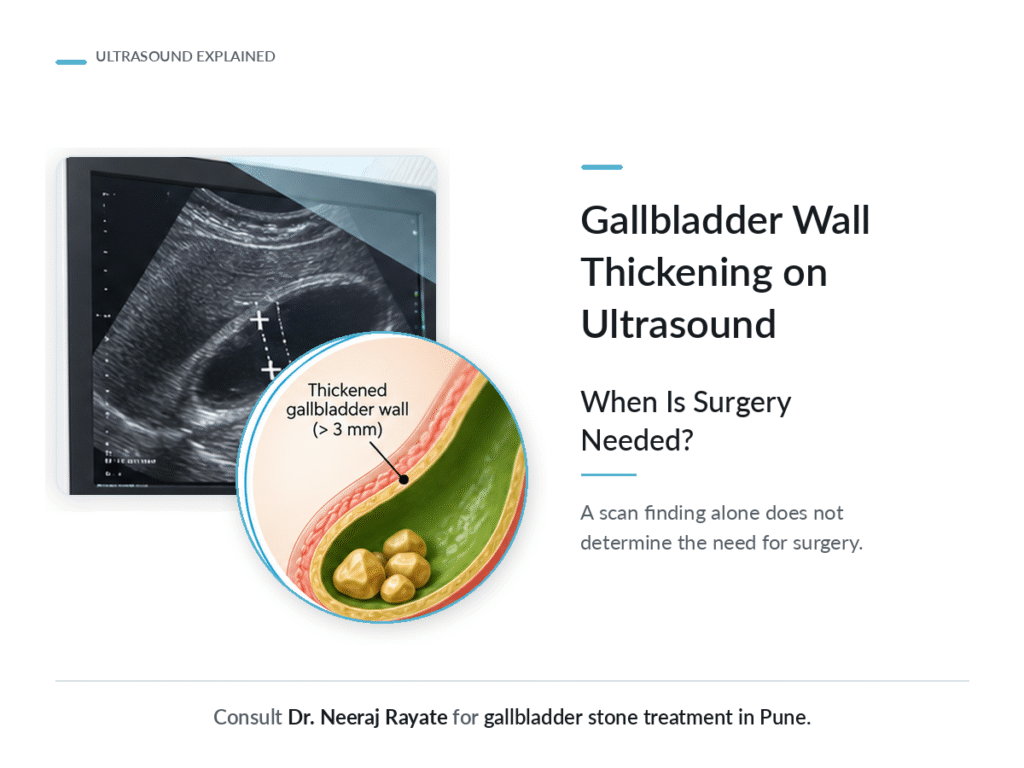
The gallbladder wall is usually thin when the patient has fasted and the gallbladder is fully distended. A wall measuring more than approximately 3 mm on ultrasound is commonly described as thickened. Measurement technique and gallbladder contraction after eating can affect the result.
A review in the American Journal of Roentgenology notes that diffuse thickening greater than 3 mm can occur in gallbladder inflammation as well as several conditions outside the gallbladder. Therefore, the number should never be interpreted in isolation.
What Can Cause Gallbladder Wall Thickening?
Possible causes include:
- Acute calculous cholecystitis, when a stone blocks the cystic duct and the gallbladder becomes inflamed
- Chronic cholecystitis from repeated irritation or previous attacks
- A contracted gallbladder after eating before the scan
- Liver disease, hepatitis or cirrhosis
- Heart failure, kidney disease or low blood protein causing body-wide fluid retention
- Pancreatitis or inflammation in nearby organs
- Adenomyomatosis and other benign gallbladder conditions
- Less commonly, focal tumour-related thickening
Diffuse, smooth thickening is often caused by inflammation or a systemic condition. Irregular focal thickening may need more detailed imaging. Neither pattern should be diagnosed from a written report alone.
When Does Thickening Suggest Acute Cholecystitis?
Acute cholecystitis becomes more likely when wall thickening appears alongside typical right-upper-abdominal pain, tenderness, fever or inflammatory blood-test changes. Ultrasound may also show gallstones, an impacted stone, gallbladder distension, surrounding fluid or tenderness when the probe presses over the gallbladder.
The 2020 World Society of Emergency Surgery guideline advises against relying on one clinical, laboratory or imaging feature. Diagnosis should use a combination of history, examination, blood tests and imaging.
This is why two people with the same 4 mm measurement may receive different recommendations. One may have fever, persistent pain and an obstructing stone, while the other has no symptoms and a systemic cause of oedema.
What Tests May Be Needed Next?
The usual assessment includes:
- Symptom review, including the location, duration and food relationship of pain
- Examination for right-upper-abdominal tenderness and signs of infection
- Blood tests such as white-cell count, C-reactive protein, liver enzymes, bilirubin and pancreatic enzymes
- Review of whether the ultrasound was performed after fasting
- Additional imaging when the diagnosis remains uncertain
The American College of Radiology considers ultrasound the first imaging choice for suspected biliary disease or right-upper-quadrant pain. If ultrasound is unclear, a HIDA scan, MRI or CT may be selected according to the suspected problem and clinical setting.
When Is Surgery Usually Required?
Laparoscopic cholecystectomy is commonly recommended when symptomatic gallstones cause acute cholecystitis, repeated biliary colic or complications such as gallstone pancreatitis. The operation removes the gallbladder and the stones it contains.
For confirmed acute calculous cholecystitis, early laparoscopic cholecystectomy is often preferred when the patient is fit for surgery and suitable expertise is available. Delaying treatment can expose the patient to further pain, infection or another admission.
Surgery may also be discussed when chronic gallbladder changes occur alongside recurring typical symptoms. Gallbladder stone treatment in Pune should address the overall clinical problem rather than the wall measurement alone.
When May Surgery Not Be Necessary?
An isolated thickened wall in a person without gallbladder symptoms may not require surgery. If the cause is hepatitis, heart failure, kidney disease or low albumin, treating the underlying condition may allow the wall to return toward normal.
Likewise, incidentally discovered gallstones that have never caused symptoms are often observed. Preventive surgery is not automatically recommended for every silent stone. Exceptions may exist based on gallbladder anatomy, cancer risk, immune status or other individual factors.
What If the Patient Is Too Unwell for Immediate Surgery?
Some patients with severe infection have medical conditions that make immediate anaesthesia unsafe. Treatment may begin with hospital monitoring, intravenous fluids, antibiotics when infection is suspected and supportive care.
Gallbladder drainage may be considered for selected high-risk patients who cannot undergo surgery at that time. It is not a routine replacement for cholecystectomy. The plan depends on illness severity, surgical risk and whether the patient may become fit for later definitive treatment.
Warning Signs That Need Urgent Review
Seek urgent medical attention for severe or persistent right-upper-abdominal pain, fever, repeated vomiting, jaundice, dark urine, pale stools, confusion or worsening weakness. These symptoms may indicate gallbladder infection, bile duct obstruction, cholangitis or pancreatitis.
Do not rely on painkillers alone when pain lasts several hours or is accompanied by fever or jaundice. Complicated gallstone disease can progress even if pain temporarily decreases.
Frequently Asked Questions
- Does a 4 mm gallbladder wall mean I need surgery?
Not automatically. More than 3 mm is commonly considered thickened, but surgery depends on symptoms, stones, inflammation, blood tests and the possibility of causes outside the gallbladder.
- Can gallbladder wall thickening return to normal?
Yes, especially when it is caused by temporary gallbladder contraction or a reversible systemic condition. Chronic scarring or repeated inflammation may persist.
- Can gallbladder cancer cause wall thickening?
It can, but cancer is much less common than inflammatory or systemic causes. Irregular focal thickening, a mass or other concerning features may lead to contrast imaging and specialist assessment.
Consult Dr. Neeraj Rayate for Gallbladder Stone Treatment in Pune
An ultrasound measurement should be interpreted in clinical context. Patients can consult Dr. Neeraj Rayate for evaluation and personalised gallbladder stone treatment in Pune. He can review symptoms, imaging and laboratory findings to determine whether observation, additional testing or laparoscopic surgery is appropriate.
This article provides general medical information and does not replace diagnosis by a qualified doctor.
#gallstones #gallbladderhealth #ultrasound #cholecystitis #laparoscopicsurgery #punehealthcare