

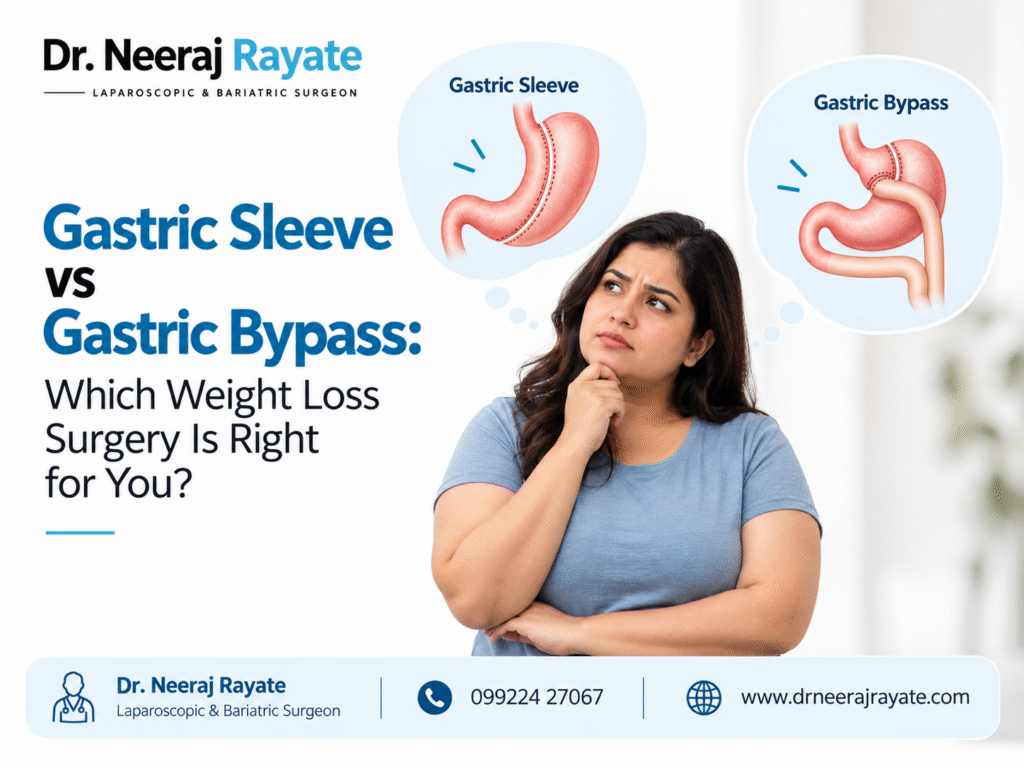
When you start exploring bariatric surgery, two names come up frequently: gastric sleeve and gastric bypass. Both can support substantial, lasting weight loss, but they change your digestive system differently. The right choice involves more than comparing how many kilograms you might lose.
Your history of acidity, diabetes, existing nutritional deficiencies, medicines, and ability to attend follow-up appointments all deserve attention. If you are considering bariatric surgery, understanding these differences can help you have a more useful conversation with your surgeon.
In this article, “gastric bypass” refers to Roux-en-Y gastric bypass. Other bypass procedures have their own benefits and risks.
How Do Gastric Sleeve and Gastric Bypass Work?
During gastric sleeve surgery, the surgeon removes most of the stomach, leaving a narrow, tube-shaped section. This smaller stomach holds less food, while changes in digestive hormones help regulate hunger and fullness. Food continues through the usual intestinal route.
During gastric bypass, the surgeon creates a small stomach pouch and connects it to a lower section of the small intestine. Food bypasses most of the stomach and the first part of the small intestine. This changes food intake, nutrient absorption, and hormonal signals involved in appetite and blood sugar control.
| Feature | Gastric sleeve | Roux-en-Y gastric bypass |
| Stomach changes | Most of the stomach is removed | A small pouch is created |
| Intestinal route | Remains unchanged | Part of the small intestine is bypassed |
| Acid reflux | Can develop or worsen | Often improves |
| Nutritional care | Lifelong supplements and monitoring | Lifelong supplements and monitoring, with a greater deficiency risk |
Which Procedure Leads to More Weight Loss?
Both procedures can produce meaningful long-term weight loss. Gastric bypass generally produces somewhat greater average weight loss, but an average cannot predict an individual result.
In the 10-year SLEEVEPASS trial, both operations produced sustained weight loss, with greater average excess-weight loss after bypass. Inflammation of the food pipe was more common after sleeve surgery.
These findings help explain the trade-offs, but they do not make bypass the best option for everyone. Ask your surgeon to explain a realistic weight range for your circumstances and how your health conditions could improve. Comparing another patient’s before-and-after photographs is unlikely to give you that answer.
Why Acid Reflux Can Influence the Choice
Frequent heartburn, sour fluid coming into the throat, or regular use of acidity medicines should be discussed before surgery.
Sleeve surgery can worsen existing reflux or cause new symptoms. Roux-en-Y gastric bypass often improves reflux, so significant reflux may favour bypass after assessment. Tell your surgeon about symptoms even if over-the-counter medicines keep them manageable.
An operation that suits your weight goals must also suit your digestive health. Reflux is therefore an important part of the decision, rather than a minor side issue.
What If You Have Type 2 Diabetes?
Both procedures may improve blood sugar control, and some people achieve diabetes remission. However, neither operation guarantees a permanent cure.
The SLEEVEPASS study found diabetes remission after both procedures, without a statistically significant difference between the groups at 10 years. This is another reason to avoid assuming one operation will automatically give every patient a better diabetes outcome.
Bring your recent blood sugar reports and medicine list to the consultation. Your diabetes treatment may need adjustment after surgery, and any reduction in medication should happen under medical supervision.
What Risks Should You Discuss?
Both operations carry risks such as bleeding, infection, blood clots, and leakage from the stomach or surgical connections. Serious complications can require further treatment, and rarely can be fatal. Later problems may include gallstones or narrowing within the digestive tract.
Bypass also carries risks of bowel obstruction, ulcers, and dumping syndrome, in which food moves rapidly into the intestine and may trigger symptoms after eating, especially sugary foods. Smoking and certain anti-inflammatory painkillers increase ulcer concerns after bypass. Share all regular and occasional medicines with your surgeon.
Nutritional deficiencies can occur after either procedure. They are generally a greater concern after bypass, but sleeve patients also need ongoing nutritional care.
What Does Life After Bariatric Surgery Involve?
After either operation, eating usually progresses from liquids to soft foods and then solid foods according to the surgical team’s plan. Hydration, adequate protein, and gradual physical activity support recovery.
Long-term care includes prescribed vitamin and mineral supplements, nutritional monitoring, and follow-up visits. Your supplement plan should reflect your procedure and individual needs.
Before deciding, consider practical questions: Can you attend reviews? How will you manage meals at work? Who can help during early recovery? Discussing these details makes the treatment plan easier to follow.
Questions to Ask Before Choosing Bariatric Surgery
- Why do you recommend this procedure for my medical history?
- How do my reflux symptoms, diabetes, or current medicines affect the choice?
- What are my individual surgical and nutritional risks?
- What follow-up, supplements, and support will I need over the coming years?
A consultation should also establish whether surgery is appropriate for you at all. The assessment may involve medical testing, nutritional evaluation, and a discussion about your readiness for the changes ahead.
Frequently Asked Questions
Is gastric sleeve reversible?
No. The removed part of the stomach cannot be restored. Gastric bypass is also intended to be permanent; reversal is complex and considered only in selected medical situations.
Can weight return after either operation?
Yes. Weight regain can occur after both procedures. Continued follow-up helps identify contributing factors and allows the team to adjust treatment and support.
Does gastric sleeve avoid the need for supplements?
No. Keeping the intestinal route unchanged does not eliminate nutritional risks. Lifelong supplements and nutritional monitoring remain important after sleeve surgery.
Discuss Your Options With Dr. Neeraj Rayate
Choosing between sleeve and bypass starts with understanding your health, expectations, and long-term care needs. To explore Bariatric surgery in Pune, book a consultation with Dr. Neeraj Rayate and discuss which approach may be appropriate for you.
#bariatricsurgeryinpune #gastricsleeve #gastricbypass #weightlosssurgery #drneerajrayate