

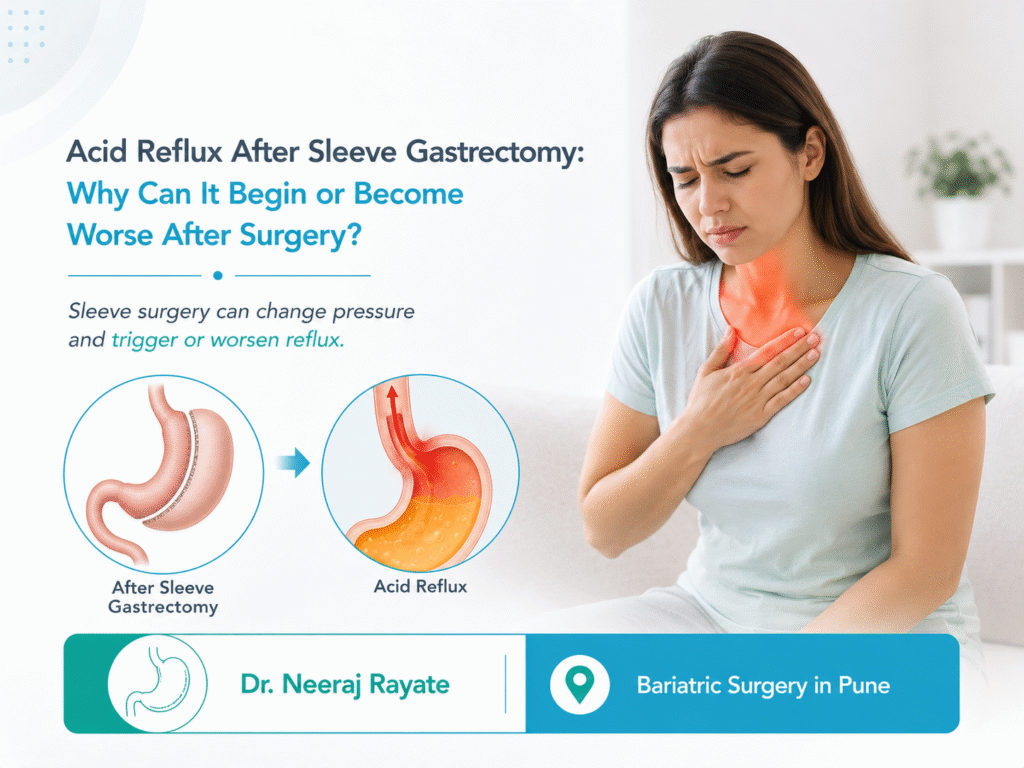
Understanding Reflux After Bariatric Surgery
Sleeve gastrectomy is one of the most commonly performed bariatric procedures worldwide. It reduces the size of the stomach and can support substantial weight loss and improvement in obesity-related health problems.
However, one digestive issue deserves particular attention: gastroesophageal reflux disease, or GERD.
Some people already have reflux before sleeve surgery and notice that it becomes more troublesome afterward. Others develop heartburn or regurgitation for the first time following the procedure.
This does not happen to every patient, but the relationship between sleeve gastrectomy and GERD is well recognized in bariatric literature.
For anyone considering bariatric surgery in Pune, discussing existing reflux symptoms before choosing a procedure is important because the type of bariatric operation can influence future reflux.
What Happens During Sleeve Gastrectomy?
During sleeve gastrectomy, a large portion of the stomach is removed.
The remaining stomach becomes a narrower, tube-shaped structure.
Food continues to pass through the normal intestinal route, so the procedure does not involve the same intestinal bypass as gastric bypass.
The smaller stomach contributes to reduced food intake and changes in appetite-related physiology.
However, changing the shape and pressure dynamics of the stomach can also influence reflux.
What Exactly Is Acid Reflux?
Acid reflux occurs when stomach contents move backward into the oesophagus.
The lower oesophageal sphincter and surrounding anatomical structures normally help prevent this.
When reflux becomes persistent and troublesome or causes complications, it may be diagnosed as GERD.
Symptoms can include heartburn, sour regurgitation, chest discomfort and, in some people, cough or throat symptoms.
Why Can Sleeve Gastrectomy Worsen Reflux?
Several mechanisms may contribute.
After sleeve surgery, the stomach is narrower and its pressure characteristics change.
Alteration of the anatomy around the junction between the oesophagus and stomach can also affect the natural anti-reflux barrier.
A hiatal hernia, sleeve shape or narrowing may contribute in selected patients.
Reflux after surgery is therefore not simply caused by “too much acid.”
Does Everyone Develop GERD After Sleeve Surgery?
No.
Many people undergo sleeve gastrectomy without developing severe reflux.
Others may even experience improvement as body weight decreases.
However, clinical studies and bariatric guidelines recognize that new or worsening GERD can occur after sleeve gastrectomy.
This possibility should form part of preoperative counselling.
Why Is Preoperative Reflux Assessment Important?
If you already experience frequent heartburn, regurgitation or require regular acid-suppressing medication, tell your bariatric surgeon before surgery.
Your symptoms may influence preoperative investigations and procedure selection.
Depending on the clinical situation, upper gastrointestinal endoscopy may be recommended.
A hiatal hernia or significant oesophageal inflammation may affect surgical planning.
Could a Hiatal Hernia Be Responsible?
A hiatal hernia occurs when part of the stomach moves upward through the diaphragm.
It can contribute to reflux by affecting the normal anti-reflux barrier.
Some hiatal hernias are recognized before bariatric surgery, while others become more apparent during evaluation.
The presence and significance of a hiatal hernia should be considered when assessing postoperative reflux.
What Symptoms Should You Watch For?
Postoperative reflux can present with:
- Burning behind the breastbone
- Sour or bitter fluid reaching the mouth
- Symptoms after meals or while lying down
- Night-time reflux
- Persistent throat irritation or cough
- Difficulty or discomfort while swallowing
Persistent swallowing difficulty or vomiting deserves particular assessment because these symptoms can also suggest a structural problem rather than uncomplicated reflux.
How Is Reflux After Sleeve Gastrectomy Evaluated?
Evaluation begins with the symptom pattern and surgical history.
Upper GI endoscopy may be recommended to look for oesophagitis, narrowing, ulcers or other abnormalities.
Contrast imaging and specialized reflux testing may be considered in selected cases.
The aim is to determine whether symptoms represent ordinary GERD or whether the sleeve anatomy is contributing.
Can Reflux Damage the Oesophagus?
Persistent acid exposure can cause inflammation called oesophagitis.
Long-standing GERD can also contribute to other oesophageal changes in some patients.
This is why repeatedly treating symptoms with over-the-counter medication without follow-up may not be appropriate, particularly after bariatric surgery.
Endoscopic evaluation may be recommended according to symptoms and individual risk.
Can Diet Help?
Eating behavior after sleeve gastrectomy can influence reflux.
Patients may be advised to:
- Eat smaller portions and avoid overeating
- Avoid lying down immediately after meals
- Identify individual trigger foods rather than restricting everything
- Follow the bariatric team’s guidance about meal and fluid timing
- Avoid late heavy meals if they consistently worsen night-time symptoms
Lifestyle measures can help but may not fully address significant postoperative GERD.
Are Acid-Reducing Medicines Used?
Proton pump inhibitors and other acid-suppressing medicines may be prescribed depending on symptoms and findings.
These medicines reduce the acidity of refluxed stomach contents and can help heal acid-related inflammation.
However, persistent symptoms despite appropriate medication require reassessment.
Simply increasing medication indefinitely without determining why reflux continues may overlook an anatomical problem.
What If Reflux Remains Severe?
Persistent GERD after sleeve gastrectomy may occasionally require additional intervention.
If severe reflux continues despite appropriate medical treatment, the bariatric surgeon may assess sleeve anatomy, hiatal hernia and other factors.
For selected patients, conversion from sleeve gastrectomy to Roux-en-Y gastric bypass may be considered.
The decision requires careful assessment because revision bariatric surgery carries its own risks and should not be undertaken solely because of occasional heartburn.
Is Gastric Bypass Better for Someone Who Already Has GERD?
Procedure selection should always be individualized.
However, significant pre-existing GERD is an important consideration when comparing sleeve gastrectomy with gastric bypass.
The American Society for Metabolic and Bariatric Surgery and bariatric literature recognize GERD as an important issue in sleeve selection and postoperative follow-up.
A surgeon should therefore know about frequent reflux before recommending the most appropriate operation.
Do Not Hide Reflux Symptoms Before Bariatric Surgery
Some patients focus entirely on weight loss and consider acidity too minor to mention.
But existing GERD can influence bariatric procedure planning.
Tell your surgeon if you regularly use acidity medication, experience night-time reflux or frequently have sour regurgitation.
Choosing a bariatric operation should consider your entire digestive and metabolic health rather than BMI alone.
Bariatric Surgery in Pune With Dr. Neeraj Rayate
If you are considering bariatric surgery in Pune and already experience acid reflux, discuss these symptoms before deciding on the procedure.
Patients who develop persistent reflux after sleeve gastrectomy can also consult Dr. Neeraj Rayate for evaluation of postoperative symptoms and appropriate management.
Preoperative assessment, appropriate procedure selection and structured long-term follow-up can help balance effective weight management with digestive health.
Frequently Asked Questions
1. Is acid reflux common after sleeve gastrectomy?
New or worsening GERD is a recognized concern after sleeve gastrectomy, although it does not occur in every patient. Persistent symptoms should be discussed with the bariatric surgeon.
2. Can acid reflux after sleeve gastrectomy go away?
Some patients improve with weight loss, dietary changes and appropriate medication. Persistent or severe reflux may require further investigation to assess the sleeve anatomy and oesophagus.
3. Can sleeve gastrectomy be converted to gastric bypass because of reflux?
Yes, conversion to Roux-en-Y gastric bypass may be considered in selected patients with significant reflux that remains troublesome despite appropriate treatment. The decision requires individualized surgical assessment.
#bariatricsurgeryinpune #bariatricsurgery #sleevegastrectomy #acidreflux #gerd #weightlosssurgery #bariatricsurgeoninpune #drneerajrayate