

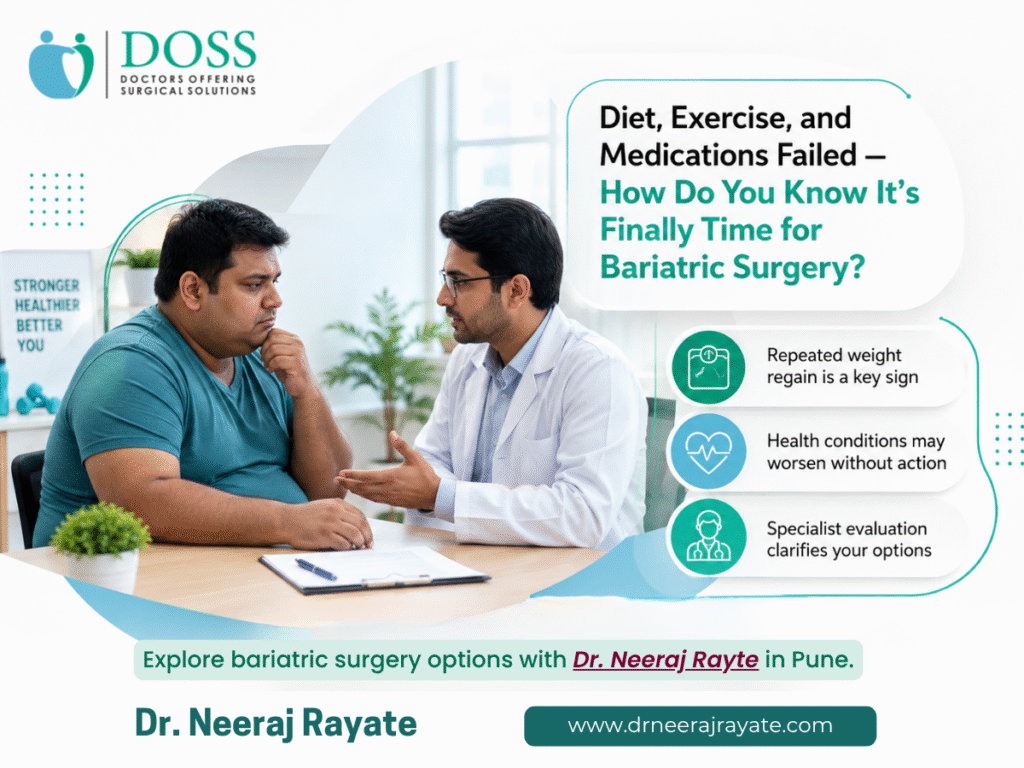
You’ve counted calories. You’ve tried intermittent fasting, strength training, cardio, and maybe even a few prescription weight loss medications. And yet, the weight keeps coming back, or it never really left in the first place. If this sounds familiar, you’re not failing at willpower. For many people living with obesity, the biology of weight regulation simply works against sustained weight loss through lifestyle changes alone.
This is exactly the point where many patients and doctors start seriously discussing bariatric surgery. But how do you know when you’ve actually reached that point, rather than just feeling discouraged? Let’s break it down.
Why Diet and Exercise Alone Often Aren’t Enough
It’s not that diet and exercise don’t work. It’s that for people with significant, long-standing obesity, the body actively resists weight loss through hormonal and metabolic changes that make it incredibly hard to keep weight off long-term.
Research consistently shows that nonsurgical methods like changes in lifestyle, physical activity, restrictive diets, and psychotherapy are often not sufficient for patients with significant obesity, which is why bariatric surgery is considered the treatment of choice once someone meets the eligibility criteria for surgery. This isn’t a failure of the person. It’s a recognition that some cases of obesity need a more direct medical intervention.
The Medical Criteria: Are You Actually a Candidate?
Before jumping to conclusions, it helps to understand the general benchmarks doctors use. According to the National Institutes of Health criteria, still the most widely referenced standard today, eligible individuals should generally have a BMI of 40 or higher, or a BMI between 35 and 40 combined with high-risk conditions like severe type 2 diabetes or cardiovascular risk factors.
Beyond BMI, here’s what doctors typically look for before recommending bariatric surgery:
- A documented history of failed weight loss attempts: Candidates are usually expected to show evidence of prior structured efforts, including diet programs, exercise plans, and medications, that didn’t produce lasting results.
- Obesity-related health complications: Conditions such as type 2 diabetes, sleep apnea, high blood pressure, fatty liver disease, or severe joint pain often strengthen the case for surgery, even at a slightly lower BMI.
- Psychological and nutritional readiness: Most programs require a psychological evaluation and a nutritional assessment to confirm the patient understands the lifestyle changes surgery demands and is mentally prepared for them.
- Long-term commitment to lifestyle change: Surgery isn’t a shortcut. Doctors look for patients willing to adopt sustainable habits afterward, since surgery works best when paired with ongoing behavioral change.
It’s worth noting that guidelines are evolving. Long-term data from the Swedish Obese Subjects study found that bariatric surgery significantly reduced the incidence of type 2 diabetes and improved cardiovascular risk factors in both patients who met strict eligibility criteria and those who didn’t, suggesting that rigid BMI cutoffs may be too limited a way to decide who could actually benefit.
Signs It Might Be Time to Talk to a Surgeon
Beyond the numbers, there are practical, everyday signs that suggest it’s worth having a serious conversation about bariatric surgery:
- You’ve tried multiple structured weight loss programs, under medical supervision, and the weight always returns within a year or two.
- Your weight is directly contributing to a diagnosed health condition, such as diabetes, hypertension, or joint deterioration.
- Physical activity has become genuinely difficult or painful due to your weight, not just uncomfortable.
- You’ve been prescribed weight loss medications and either didn’t see meaningful results or couldn’t tolerate the side effects long term.
- Your weight is affecting your mental health, confidence, or ability to participate in daily life.
If two or more of these sound like your situation, it’s a reasonable time to have an honest conversation with a bariatric specialist, even if you’re not sure you’re “ready” for surgery yet.
What Bariatric Surgery Can Actually Change
It’s not just about the number on the scale. Weight loss surgery works by limiting food intake, reducing appetite, and altering digestion, which together create conditions for sustainable weight loss that diet and exercise alone often cannot achieve for people with severe obesity.
Beyond weight loss itself, studies have shown measurable improvements in cardiovascular risk factors and a sharp reduction in the development of type 2 diabetes among surgery patients, benefits that held up even a decade or more after the procedure. For many patients, this translates into more energy, better mobility, and fewer medications for chronic conditions.
Talk to a Specialist Before Deciding
Choosing bariatric surgery is a significant decision, and it shouldn’t be made in isolation or out of frustration alone. A proper evaluation, medical history review, and honest conversation about expectations matter far more than trying to self-diagnose based on BMI charts alone.
If you’re exploring bariatric surgery in Pune, Dr. Neeraj Rayte works closely with patients to evaluate their full health picture, from BMI and comorbidities to previous weight loss attempts and psychological readiness, before recommending any surgical path. The goal is never to rush anyone into surgery, but to help patients understand whether it’s genuinely the right next step for their long-term health, and to guide them through the process with clear, realistic expectations if it is.
If diet, exercise, and medications haven’t given you lasting results, it may be time to get a proper medical opinion rather than trying one more program on your own. A conversation with a specialist could be the clarity you’ve been looking for.
Read More –
- Why Diet and Exercise Sometimes Fail in Obesity: When Medical Treatment Becomes Necessary
- Is Bariatric Surgery Safe? What Patients Fear vs What Doctors Actually Do
- When Is the Right Time for Bariatric Surgery Key Signs You Should Not Ignore
Frequently Asked Questions
- What BMI is required to qualify for bariatric surgery?
Most guidelines recommend bariatric surgery for individuals with a BMI of 40 or higher, or a BMI between 35 and 40 if accompanied by obesity-related conditions like type 2 diabetes, sleep apnea, or high blood pressure. However, eligibility also depends on prior weight loss attempts and overall health, not BMI alone. - How do I know if I’ve truly exhausted non-surgical weight loss options?
Doctors typically look for documented evidence of structured, supervised attempts at diet, exercise, and medication over a meaningful period of time. If you’ve tried multiple approaches under medical guidance and consistently regained weight, it’s a strong sign that non-surgical methods may not be sufficient for your case. - Is bariatric surgery safe for people with health conditions like diabetes or heart disease?
Yes, in many cases bariatric surgery is specifically recommended because of these conditions, as it has been shown to significantly improve or even resolve type 2 diabetes and reduce cardiovascular risk factors. A thorough pre-surgical evaluation ensures the procedure is safe for your specific health profile.
#BariatricSurgery #WeightLossJourney #ObesityTreatment #HealthyLifeChoices #BariatricSurgeryPune #WeightLossSurgery #GutHealth #SustainableWeightLoss