

Understanding Gallbladder Polyps and Gallbladder Treatment in Pune
An ultrasound performed for abdominal discomfort, fatty liver or another reason may unexpectedly report a gallbladder polyp.
The word “polyp” understandably causes anxiety because people often associate polyps with cancer. However, many gallbladder polyps are small and benign, and not every polyp requires surgery.
Management depends largely on the polyp’s size, appearance, growth and individual risk factors.
For patients considering gallbladder treatment in Pune, understanding these factors can help avoid both unnecessary anxiety and inappropriate delay in follow-up.
What Is a Gallbladder Polyp?
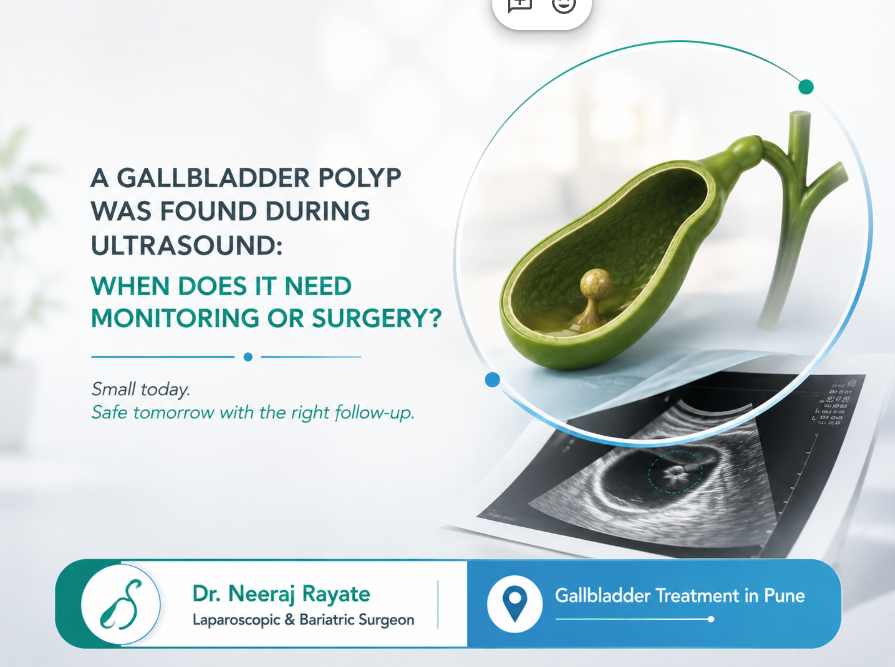
A gallbladder polyp is a growth or projection arising from the inner surface of the gallbladder.
Some ultrasound findings described as polyps are cholesterol-related lesions rather than true tumors.
Other polyps can represent inflammatory or adenomatous growths.
Ultrasound cannot always determine the exact microscopic type, so management often relies on size and risk features.
Are Gallbladder Polyps Common?
Small gallbladder polyps are frequently discovered incidentally during abdominal ultrasound.
Most do not cause symptoms.
Their discovery therefore often raises a different question from gallstones: not “How do we stop the pain?” but “Does this need surveillance?”
Professional European guidelines provide size-based and risk-based recommendations for managing gallbladder polyps.
Does Every Gallbladder Polyp Need Surgery?
No.
Very small polyps without concerning risk factors may require limited follow-up or, in some circumstances, no surveillance.
Larger polyps receive greater attention because the possibility of neoplastic change increases with size.
Management should follow current clinical guidelines and individual assessment rather than removing every gallbladder containing a tiny polyp.
Why Does Polyp Size Matter?
Size is one of the most useful features for estimating risk.
European joint guidelines on gallbladder polyp management generally recommend cholecystectomy for polyps measuring 10 mm or more when the patient is suitable for surgery.
Smaller polyps may require follow-up depending on their size and the presence of risk factors.
Recommendations can evolve, so the ultrasound should be interpreted in current clinical context.
What Other Risk Factors Matter?
Your doctor may consider:
- Increasing polyp size during follow-up
- Sessile appearance or focal gallbladder wall thickening
- Age and individual risk profile
- Primary sclerosing cholangitis
- Certain ethnicity-related risk considerations described in guidelines
- Associated symptoms when another cause has not been identified
No single factor should be interpreted without the overall clinical picture.
Can Gallbladder Polyps Cause Pain?
Many do not.
If someone has upper abdominal pain and a tiny gallbladder polyp, the polyp should not automatically be blamed.
Gallstones, gastritis, reflux and other abdominal conditions may be more likely explanations depending on the symptom pattern.
This is important because gallbladder removal for a polyp that is not actually causing symptoms may not relieve unrelated abdominal pain.
How Are Polyps Monitored?
Ultrasound is commonly used for surveillance.
The interval and duration depend on polyp size and risk factors.
Follow-up allows doctors to determine whether the lesion remains stable or increases in size.
Patients should keep previous ultrasound reports so measurements can be compared rather than treating each scan as an isolated result.
What If the Polyp Grows?
Growth deserves reassessment, but a small measurement difference does not automatically mean cancer.
Ultrasound measurements can vary slightly depending on technique and operator.
Significant or progressive growth may alter management, particularly if the polyp approaches a size at which surgery is recommended.
What Surgery Is Performed?
When removal is appropriate, the usual operation is cholecystectomy, meaning removal of the gallbladder rather than simply cutting out the polyp.
The gallbladder is then sent for histopathological examination.
Laparoscopic surgery is commonly used when clinically suitable.
Can Medicine Dissolve a Gallbladder Polyp?
There is no standard tablet that reliably makes a true gallbladder polyp disappear.
Some cholesterol-related findings may change over time, but treatment decisions should be based on proper diagnosis and surveillance rather than unproven remedies.
Should You Worry About Cancer?
Most small gallbladder polyps are not cancer.
The purpose of size-based surveillance is precisely to identify the minority of lesions that may warrant more active treatment.
Finding a tiny polyp should therefore lead to an appropriate follow-up plan rather than immediate panic.
Keep the Ultrasound Report
One practical mistake is undergoing a repeat ultrasound years later without having the previous measurement available.
A polyp reported as 7 mm is much easier to interpret if your doctor knows whether it was 6 mm, 3 mm or not visible previously.
Maintaining records can therefore directly improve clinical decision-making.
Gallbladder Treatment in Pune With Dr. Neeraj Rayate
If an ultrasound has unexpectedly detected a gallbladder polyp, Dr. Neeraj Rayate can assess its size, ultrasound characteristics and relevant risk factors.
For patients seeking gallbladder treatment in Pune, management may range from observation and scheduled ultrasound monitoring to gallbladder surgery when clinically indicated.
The presence of a polyp does not automatically mean surgery is required. The aim is to choose treatment according to actual risk.
Frequently Asked Questions
1. At what size does a gallbladder polyp need surgery?
Current European guidance generally recommends considering cholecystectomy for gallbladder polyps measuring 10 mm or more in suitable patients. Smaller polyps are managed according to size and individual risk factors.
2. Can a small gallbladder polyp become cancerous?
Most small polyps are benign. Risk is influenced by size, growth and other clinical factors, which is why selected polyps are monitored.
3. Can a gallbladder polyp disappear?
Some small cholesterol-related lesions may change or disappear on later imaging. A true polyp should be followed according to the plan recommended by your doctor.
#gallbladdertreatmentinpune #gallbladderpolyp #gallbladderhealth #cholecystectomy #gallbladdersurgery #drneerajrayate