

Nutritional Monitoring After Bariatric Surgery in Pune
Bariatric surgery changes much more than the number on the weighing scale. It can also change how much food you eat and, depending on the procedure, how efficiently certain nutrients are absorbed.
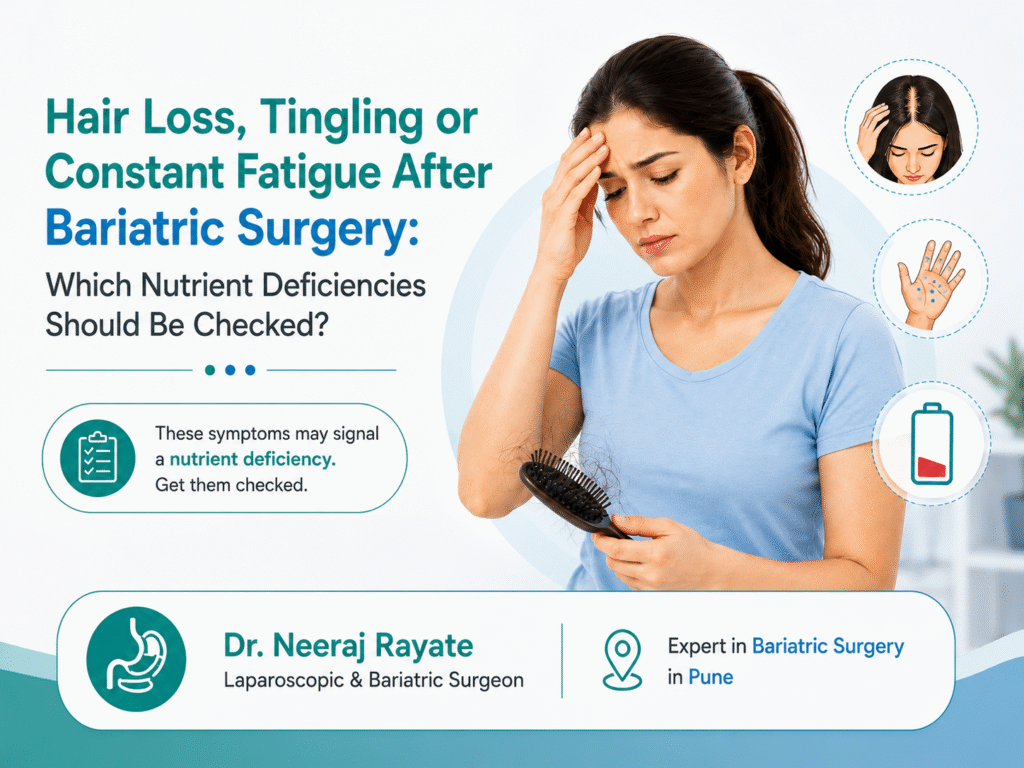
Months after surgery, some patients notice increased hair shedding, persistent tiredness, tingling in their hands or feet, weakness or difficulty concentrating.
These symptoms should not automatically be considered a normal part of losing weight.
The American Society for Metabolic and Bariatric Surgery (ASMBS) emphasizes lifelong nutritional monitoring after metabolic and bariatric procedures because deficiencies can develop even when patients initially feel well.
For anyone who has undergone bariatric surgery in Pune, regular blood tests and prescribed supplementation are important parts of long-term follow-up.
Why Can Nutritional Deficiencies Develop?
After bariatric surgery, patients eat smaller quantities of food.
Some operations also bypass portions of the gastrointestinal tract where specific nutrients are normally absorbed.
Vomiting, food intolerance or inconsistent supplement use can increase deficiency risk further.
The exact risk depends on the type of procedure, diet and individual health.
Could Iron Deficiency Cause Fatigue and Hair Loss?
Yes.
Iron is required for hemoglobin production and normal oxygen transport.
Iron deficiency may eventually cause anemia, resulting in fatigue, weakness, reduced exercise tolerance and other symptoms.
Low iron stores can also contribute to hair shedding.
Women who menstruate may have an additional risk of iron deficiency.
Ferritin and other iron studies may be checked when clinically appropriate rather than relying solely on hemoglobin.
What About Vitamin B12?
Vitamin B12 is essential for red blood cell production and neurological function.
Deficiency can cause fatigue, anemia, numbness, tingling and neurological symptoms.
Because bariatric surgery can affect normal B12 absorption, supplementation and monitoring are important.
Neurological symptoms should not be ignored because prolonged severe deficiency can potentially cause lasting problems.
Can Folate Deficiency Cause Similar Symptoms?
Folate also plays an important role in red blood cell formation.
Deficiency may contribute to anemia and fatigue.
Folate status is particularly important for women planning pregnancy because adequate folate is essential during early fetal development.
Patients planning pregnancy after bariatric surgery should discuss nutritional testing and supplementation before conception.
Why Does Vitamin D Matter?
Vitamin D supports bone and mineral health.
Low vitamin D is relatively common in people with obesity even before surgery and can persist afterward.
Calcium and parathyroid hormone may also need monitoring depending on the procedure and individual risk.
Long-term nutritional follow-up aims to protect bone health as well as prevent short-term symptoms.
Which Nutrients May Need Testing?
Depending on the operation and symptoms, your bariatric team may consider:
- Complete blood count and iron studies
- Vitamin B12 and folate
- Vitamin D and calcium
- Thiamine
- Protein or nutritional markers
- Other vitamins and trace elements when clinically indicated
The required tests vary, so patients should follow their bariatric team’s monitoring schedule.
What Causes Hair Loss After Bariatric Surgery?
Not all postoperative hair shedding is caused by a single vitamin deficiency.
Rapid weight loss and the physiological stress of surgery can trigger telogen effluvium, a temporary form of diffuse hair shedding.
Inadequate protein, iron or certain micronutrient deficiencies can also contribute.
Hair loss therefore should not be treated by randomly taking high-dose hair supplements.
The underlying cause matters.
Why Is Thiamine Deficiency Important?
Thiamine, or vitamin B1, deserves particular attention after bariatric surgery.
Risk can increase with prolonged vomiting, rapid weight loss and poor nutritional intake.
Severe thiamine deficiency can affect the nervous system and become medically serious.
Persistent vomiting combined with weakness, confusion, difficulty walking or neurological symptoms requires prompt medical assessment.
Can Tingling Be Caused by Bariatric Surgery?
Tingling or numbness can have several causes.
Vitamin B12, thiamine and other nutritional problems may contribute, but diabetes, nerve compression and unrelated neurological conditions are also possibilities.
Do not assume tingling is simply part of postoperative weight loss.
Persistent neurological symptoms should be assessed.
Is Taking a Normal Multivitamin Enough?
Not necessarily.
Bariatric patients often have specific supplementation requirements that differ from standard over-the-counter multivitamins.
Requirements also vary by procedure.
ASMBS nutritional guidance emphasizes procedure-specific supplementation and long-term monitoring.
Taking very high doses independently is also inappropriate because excessive amounts of certain nutrients can cause harm.
Why Is Protein Important?
Protein supports muscle maintenance, wound healing and many physiological processes.
After surgery, reduced stomach capacity can make adequate protein intake more challenging.
Severe inadequate intake can contribute to weakness, loss of lean body mass and hair changes.
Your bariatric dietitian can recommend an appropriate intake based on the procedure and individual circumstances.
Can Deficiencies Develop Years After Surgery?
Yes.
Nutritional monitoring is not only necessary during the first six or twelve months.
Changes in eating habits, supplement adherence, pregnancy, gastrointestinal symptoms and long-term absorption can affect nutritional status years later.
This is why bariatric surgery should be viewed as a long-term treatment requiring ongoing follow-up.
When Should You Contact Your Bariatric Surgeon?
Seek evaluation if fatigue is persistent, hair loss becomes substantial or you develop tingling, numbness, muscle weakness, repeated vomiting or difficulty maintaining adequate food intake.
Severe neurological symptoms, confusion or inability to walk normally require prompt medical care.
The earlier a significant deficiency is identified, the sooner appropriate replacement can begin.
Nutritional Follow-Up After Bariatric Surgery in Pune With Dr. Neeraj Rayate
Patients who have undergone bariatric surgery in Pune should continue nutritional monitoring even after their weight has stabilized.
Dr. Neeraj Rayate can evaluate postoperative symptoms, review nutritional follow-up and determine whether additional investigations or supplementation guidance is needed.
Successful bariatric care is not only about losing weight. Protecting nutrition, muscle, bone and long-term health is equally important.
Frequently Asked Questions
1. Which vitamin deficiency causes hair loss after bariatric surgery?
Hair loss can be associated with inadequate protein, iron or other micronutrient deficiencies, but rapid weight loss itself can also trigger temporary telogen effluvium. Testing is more useful than guessing which supplement is needed.
2. Why do I have tingling after bariatric surgery?
Vitamin B12, thiamine and other nutritional deficiencies are among possible causes. Persistent tingling or numbness should be medically assessed rather than treated with random supplements.
3. How long do I need vitamin tests after bariatric surgery?
Long-term and often lifelong nutritional monitoring is recommended because deficiencies can develop years after surgery, depending on the procedure, diet and supplementation.
#bariatricsurgeryinpune #bariatricsurgery #bariatricnutrition #hairloss #vitamindeficiency #weightlosssurgery #postbariatriccare #drneerajrayate