

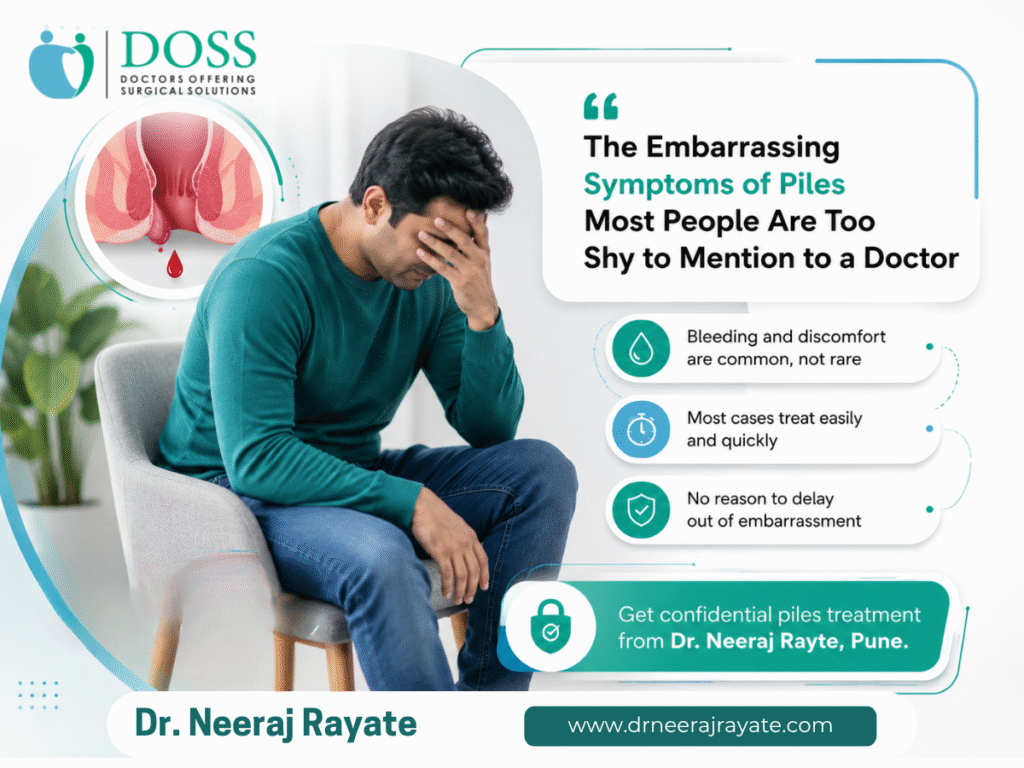
Let’s be honest. Nobody walks into a doctor’s clinic excited to talk about their bathroom habits. There’s something about anything happening “down there” that makes even confident, otherwise open people suddenly go quiet. And that’s exactly the problem with piles, also known as hemorrhoids. The embarrassment factor keeps people silent for months, sometimes years, while a fairly common and treatable condition quietly gets worse.
Here’s the thing, though: piles are far more common than most people assume. Global estimates suggest that hemorrhoidal disease affects somewhere between 4 percent and 40 percent of the population depending on the study, with a large international survey putting overall prevalence at around 11 percent among adults. You are genuinely not alone, even if it feels that way at 2 a.m. while googling your symptoms instead of booking an appointment.
Let’s talk honestly about the symptoms people tend to hide, why hiding them backfires, and when it’s time to see a piles specialist.
Why We Stay Silent About Piles
Before getting into the symptoms themselves, it’s worth understanding why so many people delay seeking help. A study conducted in Saudi Arabia found that while more than half of participants reported experiencing at least one symptom of hemorrhoids, the majority preferred using home remedies over consulting a healthcare professional, and only about a third had ever received a formal diagnosis from a doctor. That pattern shows up across cultures and countries. Shame, not lack of access, is often the real barrier.
Unfortunately, this silence has consequences. Left untreated, piles tend to progress from mild, occasional irritation to more painful, prolapsed, or bleeding hemorrhoids that are harder to manage without a procedure. Early-stage piles are usually simple to treat, while advanced cases sometimes require surgical intervention. So the very embarrassment that keeps people quiet is often what allows the condition to get worse.
The Symptoms Nobody Wants to Bring Up
If any of the following sound familiar, know that a piles specialist has heard it all before, and probably that same week. There is nothing here that will shock or surprise a colorectal doctor.
- Blood on toilet paper or in the bowl: This is one of the most common and most alarming symptoms, and understandably so. Research shows that bright red rectal bleeding after a bowel movement is one of the hallmark presentations of hemorrhoidal disease, caused by the rich blood supply in the anal cushions. While it’s usually piles, any rectal bleeding deserves a proper check to rule out other causes.
- A lump or swelling near the anus: Many people notice a small, sometimes tender lump that may go back in on its own or stay out permanently in more advanced cases. This is often the symptom that finally pushes someone to seek care, mainly because it makes sitting, walking, or even wiping uncomfortable.
- Itching and irritation: Persistent itching around the anus, medically called pruritus ani, can result from mucus discharge associated with internal piles irritating the surrounding skin. It’s uncomfortable, distracting, and frankly mortifying to deal with in public, but it’s an extremely common complaint.
- Pain during or after bowel movements: One international survey found that pain was the single most common initial symptom reported by people with hemorrhoidal disease, ahead of both bleeding and general discomfort. Straining tends to make this worse, which unfortunately creates a vicious cycle for people already dealing with constipation.
- A feeling of incomplete evacuation: Many people describe a nagging sense that they haven’t fully emptied their bowels, along with mucus discharge or minor soiling. This symptom in particular tends to go unmentioned simply because it’s hard to describe without feeling awkward.
- Difficulty with hygiene: Larger or prolapsed piles can make it genuinely difficult to keep the area clean, leading to more irritation and, understandably, more anxiety about the whole situation.
What Actually Causes Piles
Understanding the “why” often makes the conversation with a doctor feel less personal and more practical. Common contributing factors include:
- Chronic constipation and straining during bowel movements, which increases pressure on the veins in the anal canal.
- Prolonged sitting, particularly common in desk jobs and long commutes.
- A low-fiber diet that makes stools harder to pass.
- Pregnancy, due to increased pelvic pressure and hormonal changes.
- Obesity, with research showing that each one-point increase in BMI raises the risk of developing hemorrhoids.
- A sedentary lifestyle with little regular physical activity.
None of these causes are anyone’s fault, and none of them are shameful. They’re simply common, modern-life risk factors that a piles specialist deals with every single day.
When to Stop Waiting and See a Piles Specialist
A good general rule: if a symptom has lasted more than a week, involves bleeding, or is affecting your daily comfort, it’s time to get it checked. A qualified piles specialist can usually diagnose the grade and severity of piles with a simple physical examination, and treatment options range from dietary changes and topical medication for mild cases to minimally invasive procedures like rubber band ligation or sclerotherapy for more advanced ones. Surgery is generally reserved for severe or recurrent cases, not the first line of treatment, so there’s rarely a reason to fear “the worst” before even getting evaluated.
The bottom line is simple. Piles are common, treatable, and nothing to be ashamed of. The only thing that makes them harder to deal with is silence.
Read More –
- Open Piles Surgery vs Laser Piles Surgery: Which Is Better?
- Can Piles Heal Without Surgery? What Actually Works and What Doesn’t
Get Expert, Judgment-Free Care
If you’ve been putting off a conversation about symptoms you’re too embarrassed to bring up, Dr. Neeraj Rayte offers a calm, confidential space to get real answers. With focused expertise in anorectal conditions, Dr. Rayte takes the time to listen without judgment and explain exactly what’s going on, along with the most suitable treatment path for your specific situation. If you’ve been searching for a trusted piles specialist in Baner, Dr. Neeraj Rayte provides thorough evaluation, minimally invasive treatment options, and the kind of reassuring, patient-first care that makes an uncomfortable topic feel a lot less daunting to talk about.
Frequently Asked Questions
- Is rectal bleeding always a sign of piles, or could it be something more serious? Rectal bleeding is most commonly caused by piles, especially when it’s bright red and appears after a bowel movement. However, since other conditions like anal fissures or, less commonly, colorectal issues can cause similar symptoms, it’s important to have any rectal bleeding evaluated by a piles specialist rather than assuming it’s harmless. A quick examination can rule out other causes and provide peace of mind.
- Can piles go away on their own without treatment? Mild, early-stage piles sometimes improve with simple lifestyle changes such as increasing fiber intake, staying hydrated, and avoiding straining during bowel movements. However, more advanced or persistent piles usually don’t resolve on their own and tend to worsen over time without proper treatment, which is why early consultation with a piles specialist leads to simpler, less invasive care.
- Do all piles cases require surgery? No, surgery is only recommended for a small percentage of severe or recurrent cases. Most piles are managed successfully with dietary and lifestyle changes, topical treatments, or minimally invasive procedures like rubber band ligation, which can often be done in a single outpatient visit with minimal downtime.
#PilesAwareness #HemorrhoidsTreatment #GutHealth #ColorectalHealth #PilesSpecialist #DigestiveHealth #DrNeerajRayte #BanerHealthcare #NoShameNoStigma #HealthMatters