

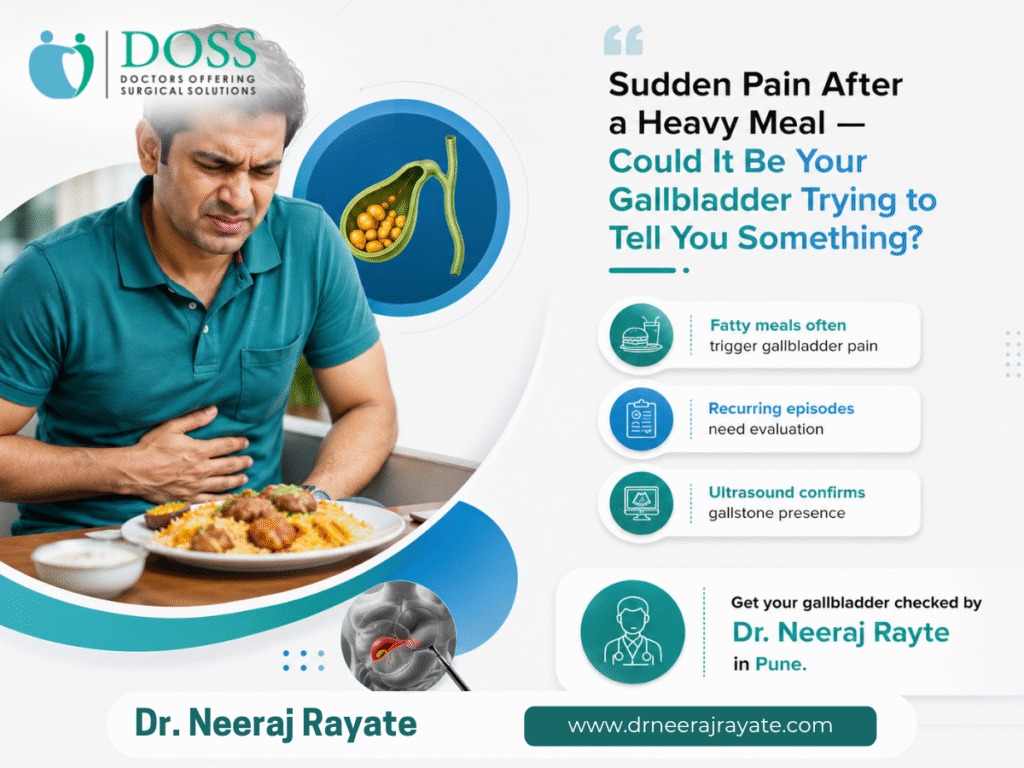
You just finished a satisfying, rich dinner, maybe some butter chicken, fried food, or a heavy dessert, and within an hour, a sharp pain grips your upper right abdomen. It’s not the usual bloated, “I ate too much” feeling. It’s sharper, more focused, and it doesn’t go away even if you shift positions or try to burp it out.
If this sounds familiar, your gallbladder might be the one sending the signal, not your stomach.
Why Heavy Meals Trigger Gallbladder Pain
Your gallbladder is a small, pear-shaped organ tucked beneath your liver, and its main job is to store bile, a fluid that helps digest fat. According to the Cleveland Clinic, when you eat, especially fatty or fried food, your digestive system signals the gallbladder to release bile, which causes it to contract and squeeze harder, increasing pressure inside it.
Under normal circumstances, this process is smooth and painless. But if a gallstone is partially or fully blocking the flow of bile, that pressure has nowhere to go, and pain follows. UnitedHealthcare notes that a gallstone can partially block the gallbladder, causing pain specifically after a heavy meal, since fattier foods demand more bile output than the blocked duct can handle.
A few patterns doctors commonly see with this kind of pain:
- Timing: Pain typically starts within thirty minutes to two hours after eating, especially after fried, oily, or rich food.
- Location and spread: It’s usually felt in the upper right or center of the abdomen and can radiate to the back or right shoulder blade.
- Intensity: The pain is often described as sudden, sharp, or knife-like, and unlike other abdominal discomfort, it doesn’t ease up with movement, passing gas, or lying down differently.
- Duration: According to information from GHS, most gallbladder attacks last between one and five hours, though some resolve in as little as thirty minutes.
When It’s More Than Just an Occasional Attack
Here’s the part many people miss: even if the pain fades on its own, it doesn’t mean the underlying problem is gone. Gallstones rarely dissolve or pass without help, and a repeat attack is common once the gallbladder has flagged trouble once.
WebMD explains that many people carry gallstones without ever knowing it, since silent stones often cause no symptoms at all. It’s only when a stone grows large enough to obstruct bile flow that pain, nausea, or vomiting shows up. If these episodes start repeating, it usually signals that your gallbladder needs proper evaluation rather than home remedies or waiting it out.
Warning signs that should never be ignored include:
- Pain lasting longer than a few hours without relief
- Fever or chills alongside abdominal pain
- Yellowing of the skin or eyes, which points to a possible bile duct blockage
- Nausea and vomiting that keep recurring after meals
The Cleveland Clinic notes that a fever above 100°F can occur in up to a third of people with acute cholecystitis, or gallbladder inflammation, and this combination of symptoms often means the situation needs urgent medical attention rather than a wait-and-watch approach.
Understanding Gallbladder Treatment Options
Not every gallbladder issue requires immediate surgery, but ignoring repeated attacks can lead to complications like infection or a blocked bile duct, which are far more serious than the original discomfort. This is why timely, medically guided gallbladder treatment matters so much.
Depending on how severe and frequent your symptoms are, a doctor will typically evaluate you through an ultrasound or blood tests to check for inflammation or blockage. From there, gallbladder treatment can range from dietary and lifestyle adjustments for milder, infrequent cases to laparoscopic gallbladder removal surgery for those with recurring attacks or complications. As Dr. Neeraj Rayte often points out to patients, the goal of any gallbladder treatment plan isn’t just pain relief in the moment, it’s preventing the next attack and protecting the liver and bile ducts from long-term damage.
For people who experience gallbladder pain repeatedly after meals, surgical removal of the gallbladder, known as cholecystectomy, is one of the most commonly performed procedures worldwide and is usually done using minimally invasive techniques with a fairly quick recovery.
Read More –
- Effective Solutions for Gallbladder Issues: Expert Care by Dr. Neeraj Rayate in Pune
- Gallbladder Stones? Expert Gallstone Treatment in Pune by Dr. Neeraj Rayate
- Gallstones or Indigestion? How to Know If Your Stomach Pain Is Actually a Gallbladder Problem
Don’t Wait for the Next Attack
If sudden pain after a heavy meal has happened to you more than once, it’s worth paying attention. Your gallbladder doesn’t send these signals randomly, and repeated episodes almost always mean there’s an underlying issue that needs a proper look, not just another antacid or a change in diet.
Dr. Neeraj Rayte specializes in diagnosing and managing gallbladder conditions, helping patients understand whether their symptoms need monitoring, medication, or surgical intervention. If you’re searching for reliable gallbladder treatment in Pune, getting evaluated early can save you from an unexpected emergency room visit down the line. A timely consultation and the right gallbladder treatment plan can mean the difference between a manageable issue and a medical emergency.
Frequently Asked Questions
- Why does gallbladder pain happen specifically after eating heavy or fatty meals?
Fatty meals require your gallbladder to release more bile to aid digestion, which causes it to contract harder. If a gallstone is blocking the bile duct, this increased contraction raises pressure inside the gallbladder, leading to sudden pain. This is why symptoms are most noticeable after rich, oily, or fried food. - How do I know if it’s gallbladder pain and not just indigestion?
Gallbladder pain tends to be sharp, constant, and centered in the upper right abdomen, often spreading to the back or shoulder, and it doesn’t improve with typical remedies like antacids or passing gas. If pain lasts more than a couple of hours, or comes with fever, vomiting, or yellowing skin, it’s likely more than indigestion and needs prompt medical evaluation. - Is surgery always necessary for gallbladder problems?
Not always. Mild or infrequent symptoms may be managed with dietary changes and monitoring, but recurring attacks or complications like infection usually require gallbladder treatment through laparoscopic removal surgery. A proper diagnosis from a specialist is the best way to determine which approach is right for your situation.
#GallbladderHealth #GallstonePain #DigestiveHealth #GallbladderTreatmentInPune #HealthyEating #AbdominalPain #GutHealth #LaparoscopicSurgery #WomensHealth #MensHealth