

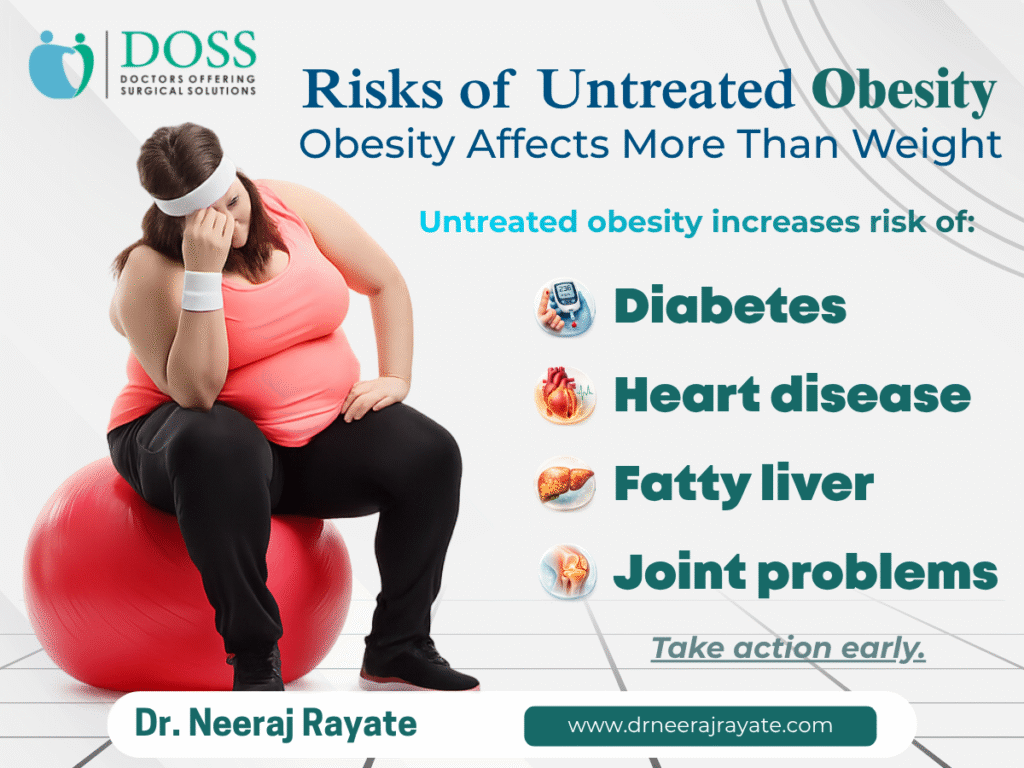
Obesity is often viewed only as a weight-related issue, but the reality is far more serious. Excess body weight can silently damage vital organs, affect mobility, and increase the risk of several life-threatening conditions. According to the World Health Organization (WHO), worldwide obesity has nearly tripled since 1975, making it one of the biggest global health concerns today.
What makes obesity especially dangerous is that many complications develop slowly over time without obvious symptoms in the early stages. From diabetes and heart disease to fatty liver and painful joint disorders, untreated obesity can significantly reduce both quality of life and life expectancy.
Understanding these risks is the first step toward prevention and healthier living.
What Is Obesity?
Obesity is a medical condition where excessive body fat accumulates to a level that negatively affects health. It is commonly measured using the Body Mass Index (BMI).
BMI Categories:
- Normal weight: 18.5 – 24.9
- Overweight: 25 – 29.9
- Obese: 30 and above
While BMI is not the only measure of health, it is widely used by healthcare professionals to assess obesity-related risks.
According to the Centers for Disease Control and Prevention (CDC), obesity increases the risk of many serious diseases and health complications.
1. Obesity and Type 2 Diabetes
One of the most common and dangerous consequences of obesity is Type 2 Diabetes.
Excess fat, especially around the abdomen, affects how the body uses insulin. Over time, the body becomes resistant to insulin, causing blood sugar levels to rise.
Common Symptoms of Diabetes:
- Frequent urination
- Excessive thirst
- Fatigue
- Blurred vision
- Slow wound healing
Research published by the American Diabetes Association states that obesity is one of the strongest risk factors for Type 2 Diabetes.
Why This Is Dangerous
Untreated diabetes can lead to:
- Kidney damage
- Nerve problems
- Vision loss
- Heart complications
- Increased risk of stroke
Losing even 5–10% of body weight can significantly improve blood sugar control.
2. Increased Risk of Heart Disease
Obesity places extra strain on the heart and blood vessels. Excess body fat can raise cholesterol levels, increase blood pressure, and trigger inflammation throughout the body.
These factors greatly increase the risk of:
- Heart attacks
- Stroke
- High blood pressure
- Coronary artery disease
The American Heart Association reports that obesity is directly linked to cardiovascular disease and premature death.
How Obesity Affects the Heart
When the body carries excess weight:
- The heart must work harder to pump blood
- Blood vessels become narrower
- Cholesterol deposits build up in arteries
- Oxygen supply to the heart decreases
This combination can silently damage the cardiovascular system for years before symptoms appear.
Warning Signs to Watch For
- Chest discomfort
- Breathlessness
- Swelling in legs
- Fatigue during physical activity
- Irregular heartbeat
Seeking medical guidance early can help prevent long-term complications.
3. Fatty Liver Disease: The Hidden Organ Damage
Many people are unaware that obesity can seriously affect liver health.
What Is Fatty Liver Disease?
Non-Alcoholic Fatty Liver Disease (NAFLD) occurs when fat builds up in the liver due to obesity and poor metabolism.
According to the National Institute of Diabetes and Digestive and Kidney Diseases (NIDDK), obesity is one of the leading causes of fatty liver disease worldwide.
Symptoms May Include:
- Fatigue
- Abdominal discomfort
- Weakness
- Unexplained weight changes
In severe cases, fatty liver can progress to:
- Liver inflammation
- Liver scarring (cirrhosis)
- Liver failure
The concerning part is that many individuals experience no symptoms in the early stages.
4. Joint Problems and Reduced Mobility
Excess body weight puts tremendous pressure on joints, especially:
- Knees
- Hips
- Lower back
- Ankles
For every extra kilogram of body weight, the knees experience several times more pressure during walking and movement.
Common Joint Problems Linked to Obesity:
- Osteoarthritis
- Chronic knee pain
- Back pain
- Reduced flexibility
- Difficulty walking
Over time, obesity can reduce mobility and make physical activity more difficult, creating a cycle of further weight gain.
Impact on Daily Life
People struggling with obesity may experience:
- Difficulty climbing stairs
- Poor posture
- Fatigue during routine activities
- Lower confidence and emotional stress
Early intervention can protect joint health and improve long-term mobility.
The Importance of Early Weight Management
The good news is that obesity-related complications can often be prevented or controlled with timely treatment and lifestyle changes.
Effective Weight Management Strategies:
- Balanced nutrition
- Regular exercise
- Better sleep habits
- Stress management
- Medical supervision
For individuals with severe obesity who struggle to lose weight through diet and exercise alone, consulting a Bariatric surgeon may be beneficial.
Bariatric procedures can help patients achieve sustainable weight loss while improving obesity-related conditions such as diabetes, hypertension, and sleep apnea.
When Should You Consult a Bariatric Surgeon?
You may benefit from consulting a Bariatric surgeon if:
- Your BMI is above 35
- You have obesity-related health conditions
- Traditional weight-loss methods have failed
- Obesity is affecting your quality of life
Modern bariatric surgery techniques are safer, minimally invasive, and designed to support long-term health improvement under expert medical care.
Take Action Before Obesity Affects Your Health
Obesity is not just about appearance it is a serious medical condition that can silently impact nearly every organ in the body. Diabetes, heart disease, fatty liver, and joint problems often develop gradually, making early awareness and treatment extremely important.
Making healthy lifestyle changes today can prevent major health complications tomorrow.
If you are struggling with obesity and looking for expert guidance, Dr. Neeraj Rayate, an experienced Bariatric surgeon in pune, offers advanced obesity treatment and weight-loss solutions tailored to individual health needs. With professional evaluation, personalized treatment plans, and modern surgical care, patients can take a confident step toward a healthier and more active life.